Skip to content
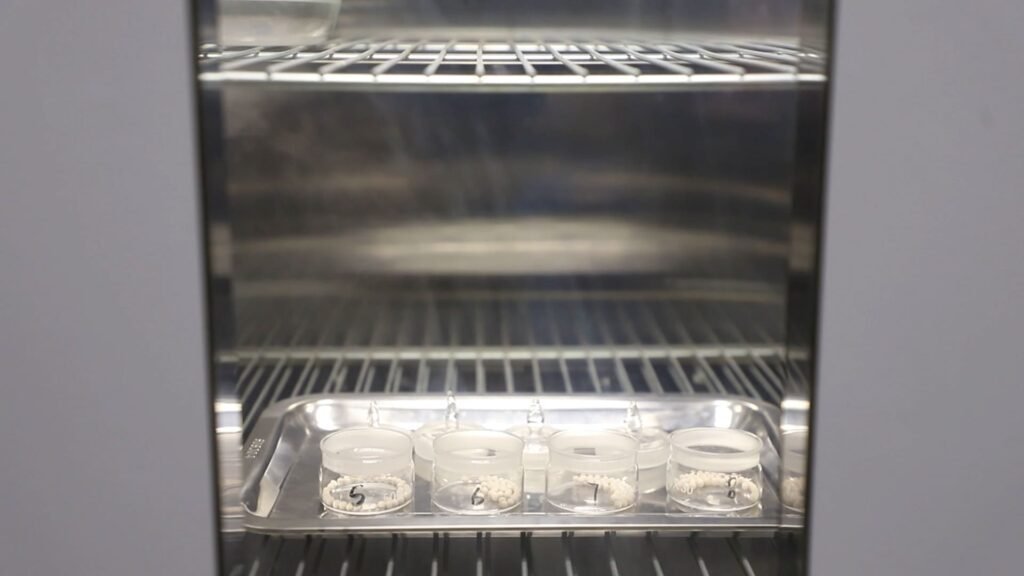
Struggling to achieve deep, stable drying in high-moisture environments? This inefficiency costs you money and compromises quality. A layered adsorbent bed[^1] is the answer you've been looking for.
The best way to design an adsorption tower[^2] is often with a dual-bed system[^3]. This system uses activated alumina[^4] as a primary, high-capacity drying layer[^5] and a molecular sieve[^6] as a secondary, deep-drying layer. This combination maximizes efficiency, protects the system, and lowers overall operational costs.

In my years of experience, I've seen many clients try to solve complex drying problems with a single solution. It rarely works as well as they hope. The real magic happens when you combine the strengths of different materials. Think of it like a specialized team where each member has a unique and critical job. In the world of industrial drying[^7], the partnership between activated alumina[^4] and molecular sieve[^6]s is that all-star team. This combination isn't just a random pairing; it's a carefully engineered strategy designed for peak performance and economic sense. Let's explore how this powerful duo works together to deliver results that neither could achieve alone.
Why Use Activated Alumina as the First Protective Layer?
Pushing high-humidity air directly into a molecular sieve[^6] bed is a recipe for trouble. The sieve saturates quickly, requiring frequent regeneration and shortening its lifespan, which drives up costs.
Activated alumina acts as a robust, cost-effective "guard bed." It is placed as the first layer to adsorb the bulk of the moisture from the inlet stream. This protects the more sensitive and expensive molecular sieve[^6] layer downstream from being overwhelmed by high water loads.

I always explain it to my partners like this: activated alumina[^4] is the heavy lifter. It's tough, it's strong, and it can handle the big, wet jobs without complaining. Its job is to take the biggest hit from the incoming process stream. By doing so, it sets the stage for the next layer to perform its highly specialized task perfectly. This isn't just about adding another material; it's about intelligent system design that extends the life of your entire adsorption unit and saves you significant money in the long run. Let's break down exactly why activated alumina[^4] is the perfect choice for this role.
High Water Adsorption Capacity
Activated alumina has a highly porous structure with a large surface area. This allows it to hold a significant amount of water, often up to 20% of its own weight. When you have an inlet stream with very high relative humidity, the alumina layer acts like a sponge, soaking up the vast majority of the water vapor. This is especially critical in preventing liquid water droplets from reaching and damaging the molecular sieve[^6] bed, a phenomenon known as "slugging."
Excellent Mechanical Strength
One of activated alumina[^4]'s best features is its physical toughness. It has high crush strength and is resistant to attrition, meaning it doesn't easily break down into dust. More importantly, it is stable in the presence of liquid water. Unlike some desiccants, it won't crack or burst when it comes into contact with water droplets. This makes it the ideal first line of defense in unpredictable conditions, ensuring the structural integrity of the entire adsorbent bed[^1].
Cost-Effectiveness as a Sacrificial Layer
Let's be practical. Activated alumina is significantly less expensive than high-performance molecular sieve[^6]s. By using it as the primary drying agent, you are essentially creating a sacrificial layer. It takes on the most demanding work and endures the harshest conditions. This drastically reduces the load on the downstream molecular sieve[^6], extending its operational life and cutting down on the frequency of costly replacements.
| Feature | Role in the Dual-Bed System |
|---|---|
| High Capacity | Removes the bulk (70-80%) of the moisture from the inlet gas. |
| Mechanical Strength | Protects the bed from damage by liquid water and pressure fluctuations. |
| Low Cost | Acts as an economical and replaceable "guard" for the more expensive layer. |
What is the Role of the Molecular Sieve in the Second Layer?
Your process demands extremely dry air, with a dew point[^8] of -40°C or lower. Standard desiccants like activated alumina[^4] just can't get you there, risking moisture contamination[^9] downstream.
The molecular sieve[^6] acts as the "polishing" layer. Following the activated alumina[^4], it uses its precise, uniform pore structure to adsorb the final traces of water vapor. This allows the system to achieve the very low dew point[^8]s required for critical applications.

If activated alumina[^4] is the heavy lifter, then the molecular sieve[^6] is the precision specialist. After the alumina has removed the vast majority of the water, the gas stream still contains trace amounts of moisture. For many sensitive industrial processes, this remaining moisture is still too much. This is where the unique properties of the molecular sieve[^6] come into play. Its ability to grab those last few water molecules is what makes this dual-bed system[^3] so effective. It's the difference between "dry" and "critically dry," a distinction that is crucial for quality and performance.
Precision Adsorption Through Uniform Pore Size
Unlike activated alumina[^4] with its varied pore sizes, molecular sieve[^6] are manufactured with a very specific and uniform pore opening. For example, our 4A molecular sieve^10[^6] has a pore diameter of 4 angstroms. This acts like a precise molecular filter. It allows small water molecules (about 2.6 angstroms) to enter and be adsorbed, but it excludes larger molecules present in the gas stream. This selectivity ensures that it focuses its capacity solely on removing the target contaminant—water.
Achieving Deep Dehydration (Low Dew Points)
The key advantage of a molecular sieve[^6] is its strong affinity for water, even at very low concentrations. While activated alumina[^4] is great for bulk removal, its efficiency drops off as the air gets drier. A molecular sieve[^6], however, continues to adsorb water effectively even when the partial pressure of water vapor is extremely low. This is how it can consistently achieve very low pressure dew point^11[^8]s (PDP), often down to -70°C or even lower, a level that is simply unattainable with activated alumina[^4] alone.
High Performance in the Final Stage
The molecular sieve[^6] layer is where the final quality of your compressed air or gas is determined. By the time the gas reaches this layer, it's already relatively dry. The sieve's job is to take it from "commercially dry" to "instrument quality" or "process critical" dry. This ensures that no residual moisture can cause issues like freezing, corrosion, or catalyst poisoning in downstream equipment and processes.
| Adsorbent Type | Typical Dew Point Achievable | Key Function |
|---|---|---|
| Activated Alumina | -20°C to -40°C | Bulk water removal, high-capacity pre-drying. |
| 4A Molecular Sieve | -40°C to -70°C | Deep dehydration, polishing, final moisture removal. |
How Does This Combination Create Synergy in a Real-World Application?
Facing extreme conditions like 90% humidity and 45°C air is a nightmare. A standard drying system would quickly fail, leading to costly downtime and inconsistent product quality for our clients.
We proved this synergy in a project for a client in South Asia. Our engineers designed a dual-bed "Activated Alumina + 4A Molecular Sieve" system. The alumina handled the massive initial moisture load, protecting the 4A sieve, which then polished the air to a stable -46°C dew point[^8].

Theory is one thing, but results are what matter to our partners. I remember this project clearly because the conditions were some of the most challenging we've ever faced. The client needed a constant supply of deeply dried air for a critical manufacturing process, but their plant was located in a region with brutal heat and humidity. A single-desiccant system would have been overwhelmed in hours. Our solution wasn't just about supplying a product; it was about engineering a process that would be robust, reliable, and deliver performance that exceeded all expectations, even in the worst-case scenario.
The Challenge: Extreme Environmental Conditions
The client's facility in South Asia presented a perfect storm for any drying system. The inlet air going into the compressor was at 45°C with a staggering 90% relative humidity. After compression to 7 Barg, the air was saturated with water. The goal was to achieve a stable pressure dew point^11[^8] of -40°C or lower to protect their sensitive downstream equipment. Any failure in the drying system would mean immediate production halts and potential damage to expensive machinery. They needed a solution that was not just effective, but bulletproof.
Our Engineered Solution: A Golden Combination
Our engineering team specified a high-performance modular desiccant dryer[^12] with a dual-bed configuration.
- Layer 1: Activated Alumina: We used a substantial bed of our high-quality activated alumina[^4] as the first point of contact. Its role was to absorb the massive water load from the hot, saturated air. It effectively reduced the relative humidity by over 80%, doing the heavy lifting.
- Layer 2: 4A Molecular Sieve: Following the alumina, we installed a bed of our 4A molecular sieve^10[^6]. Now dealing with pre-dried air, the 4A sieve could operate in its ideal condition. It efficiently adsorbed the remaining water molecules, polishing the air to an extremely low dew point[^8].
The Results: Stability Beyond Expectations
The performance of the dual-bed system[^3] was a complete success. Even under the most extreme ambient conditions, the system consistently delivered air with a stable pressure dew point^11[^8] of -46°C. This was well below the client's -40°C requirement and provided a crucial safety margin. The synergy was clear: the alumina protected the sieve, and the sieve delivered the deep dryness. The client not only secured the quality of their process gas but also benefited from longer regeneration cycles and extended desiccant life, proving the economic and operational superiority of this engineered approach.
Conclusion
The combination of activated alumina[^4] and molecular sieve[^6]s is a powerful, cost-effective strategy for demanding industrial drying[^7] applications, ensuring both efficiency and deep dehydration[^13].
[^1]: Discover the role of adsorbent beds in industrial drying applications. [^2]: Discover the function and design of adsorption towers in drying applications. [^3]: Discover the advantages of dual-bed systems for improved drying performance. [^4]: Explore how activated alumina enhances drying efficiency and protects downstream systems. [^5]: Understand the importance of high-capacity layers in maximizing drying efficiency. [^6]: Learn about the unique properties of molecular sieves and their role in achieving low dew points. [^7]: Learn about common challenges faced in industrial drying and potential solutions. [^8]: Understand the significance of dew point in ensuring quality in industrial processes. [^9]: Understand the risks of moisture contamination and how to prevent it. [^10]: Learn about the specific features that make 4A molecular sieves effective for deep drying. [^11]: Understand the concept of pressure dew point and its relevance in drying systems. [^12]: Explore the features and benefits of modular desiccant dryers in drying applications. [^13]: Explore methods and technologies for achieving deep dehydration in processes.