Skip to content
Your oxygen generator is underperforming, hurting productivity and profits. The cause is often a simple component. The solution lies in understanding and upgrading your molecular sieves.
Oxygen generators produce high-purity oxygen using molecular sieves to separate gases. These sieves act like a filter, trapping nitrogen molecules from compressed air under pressure. This allows the larger oxygen molecules to pass through, resulting in a concentrated stream of high-purity oxygen.
I've seen it many times in my 20 years in the chemical industry. A client's entire production line slows down, and they blame their expensive oxygen generator. They consider a massive overhaul or even a full replacement. But often, the problem isn't the machine itself. It's the critical material inside that does the real work. Once you understand the role of this material, you can solve performance issues far more easily and cost-effectively. Let's dive into the heart of your oxygen generator and see what really makes it tick.
What Exactly is a Molecular Sieve and How Does it Separate Gases?
Confused about how tiny beads can separate gases? This uncertainty makes choosing the right adsorbent difficult and can lead to costly mistakes. Let’s demystify this critical technology now.
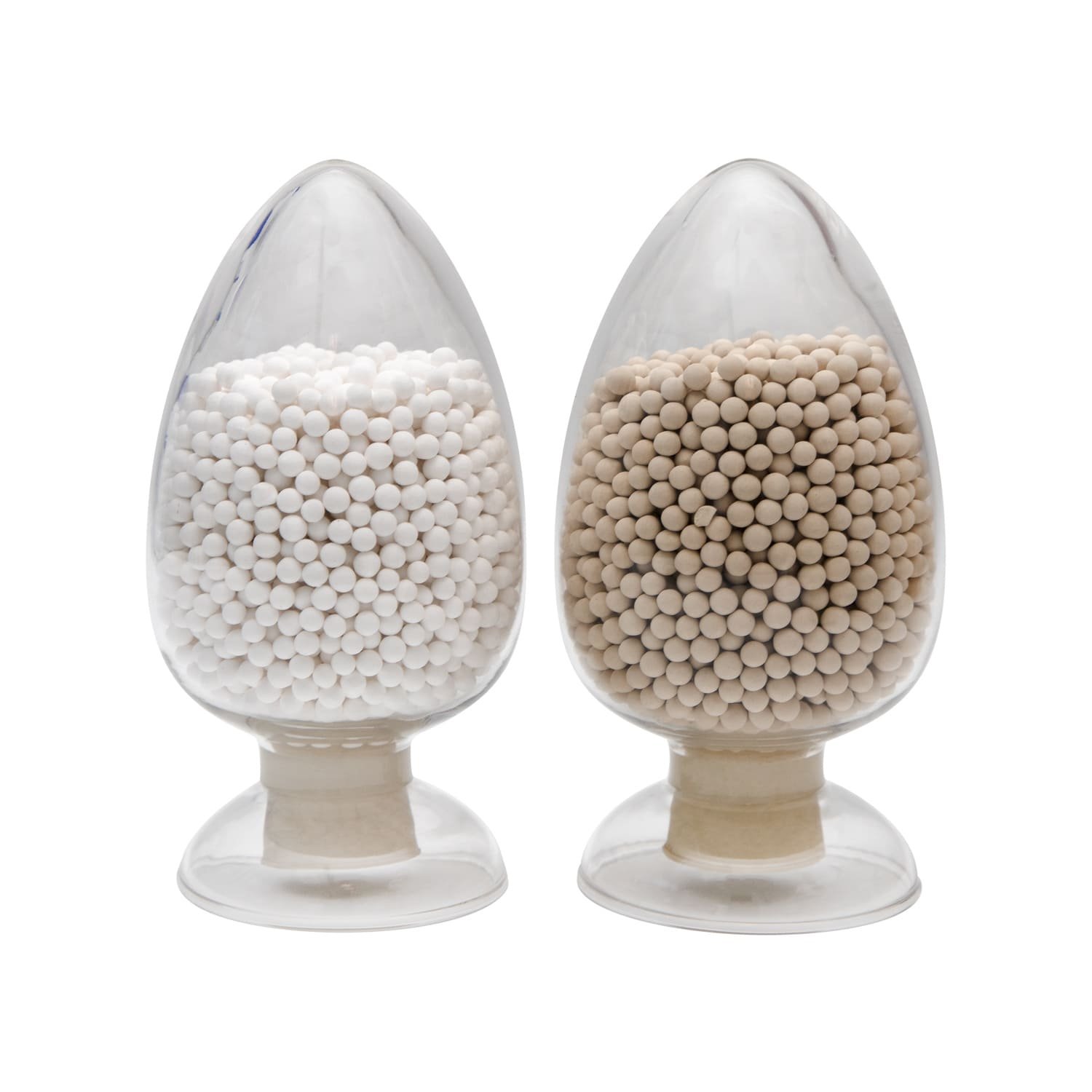
A molecular sieve is a material with millions of tiny, uniform pores. In an oxygen generator, it selectively adsorbs nitrogen molecules from the air, which are smaller, while letting the larger oxygen molecules pass through. This process is called Pressure Swing Adsorption (PSA).
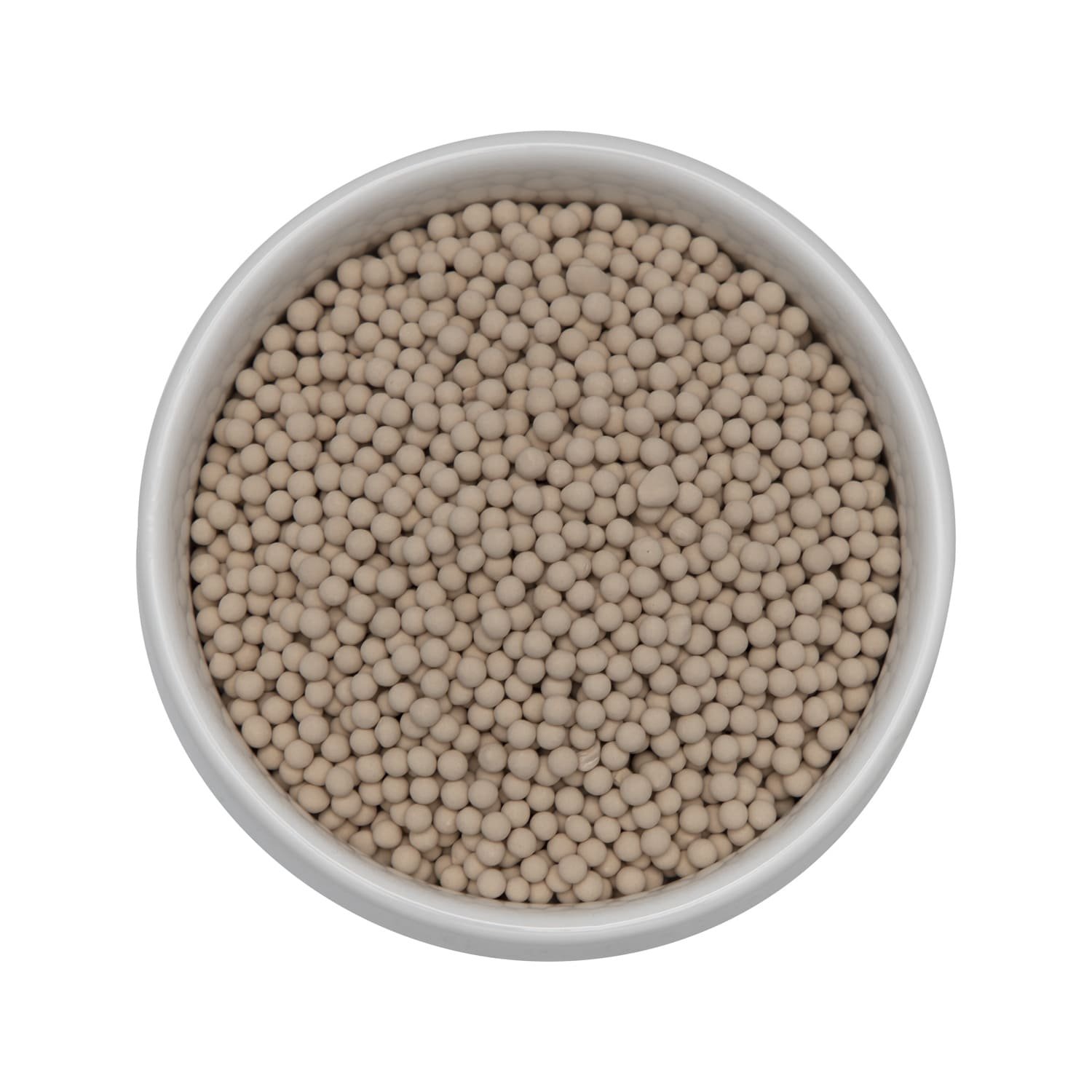
Think of a molecular sieve as a highly advanced sponge. But instead of soaking up water, it's designed to "soak up" specific gas molecules. The magic is in the pore size, which is measured in angstroms (Å). These pores are engineered to be a precise size. In the case of oxygen generation, the sieve material is a synthetic zeolite with pores that are just the right size to trap nitrogen molecules (which have a kinetic diameter of about 3.64 Å) but are too small for oxygen molecules (with a diameter of about 3.46 Å) to enter easily under pressure dynamics.
This process happens in a cycle:
- Adsorption: The oxygen generator's compressor pushes air into a tank filled with molecular sieves. The high pressure forces nitrogen into the sieve's pores.
- Release: The high-purity oxygen, which wasn't trapped, flows out of the tank for use.
- Regeneration: The pressure in the tank is released. This causes the molecular sieve to release the trapped nitrogen, which is then vented away. The sieve is now ready for the next cycle.
This is the core of the Pressure Swing Adsorption (PSA) technology that powers most industrial oxygen generators.
| Molecule | Kinetic Diameter (Å) | Adsorption Behavior |
|---|---|---|
| Nitrogen (N₂) | 3.64 Å | Adsorbed by sieve |
| Oxygen (O₂) | 3.46 Å | Passes through sieve |
| Argon (Ar) | 3.40 Å | Passes through sieve |
Note: While oxygen is smaller, the quadrupole moment of the nitrogen molecule causes it to be preferentially adsorbed by the zeolite crystal structure.
Which Molecular Sieve is Best for Oxygen Generation?
Choosing the wrong sieve for your generator leads to low purity and frequent replacements. This is a costly mistake that can halt your operations. Let's identify the right sieve for the job.
For most industrial PSA oxygen generators, a 13X-type molecular sieve is the best choice. Specifically, modified versions like our 13X-Ⅲ and 13X-HP are designed for high nitrogen adsorption capacity and efficiency, ensuring consistently high-purity oxygen output.
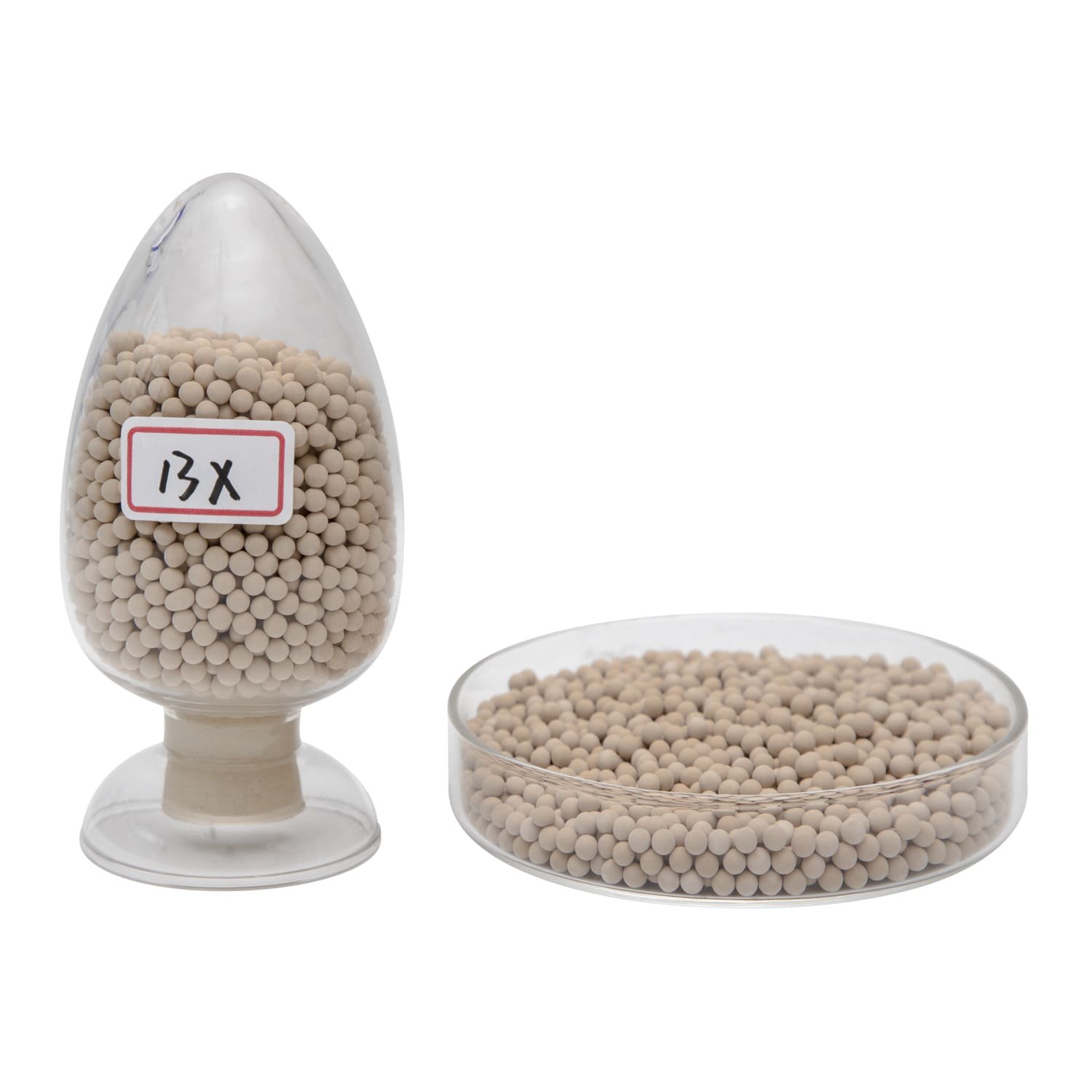
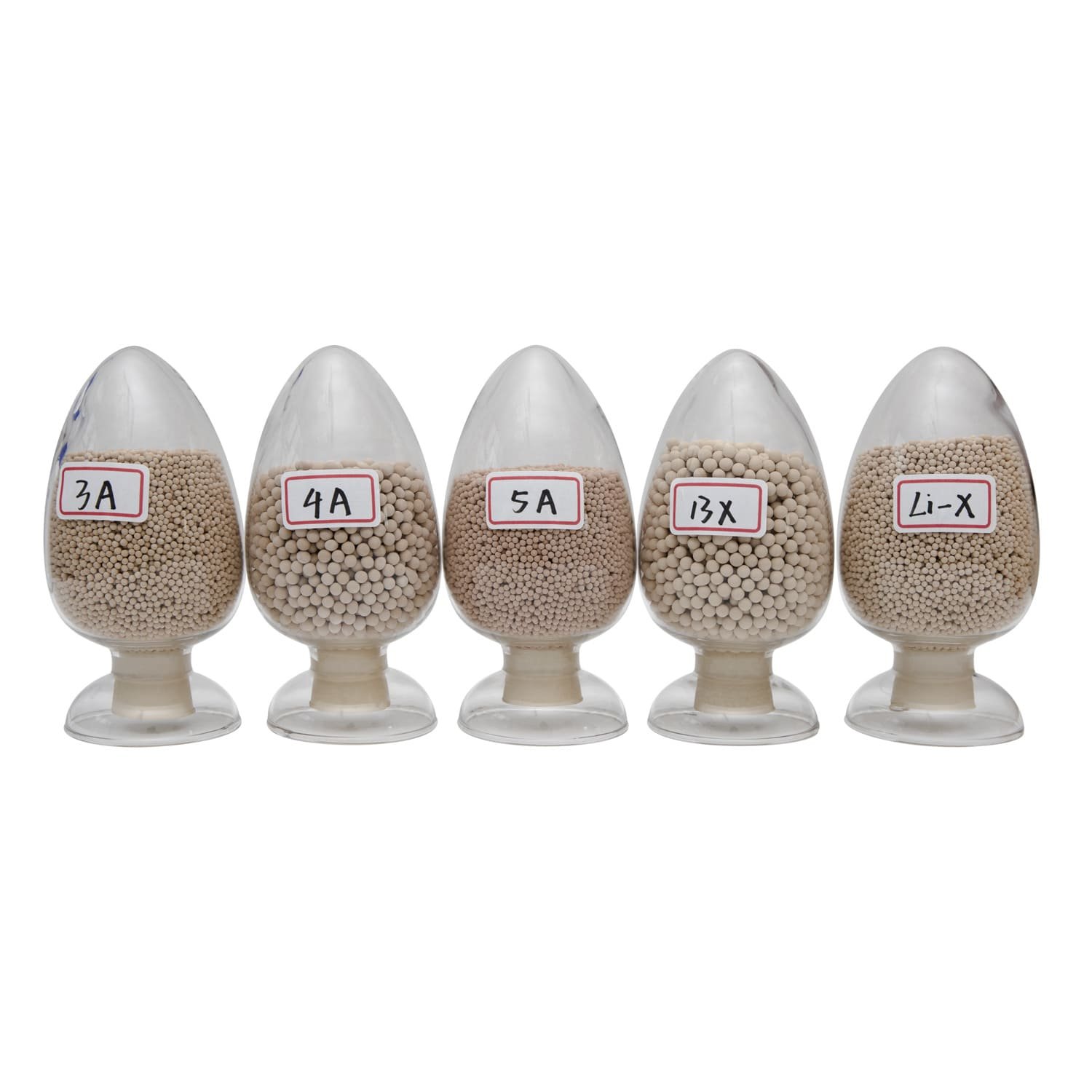
Not all 13X molecular sieves are created equal. The standard 13X is a great general-purpose adsorbent, but for demanding applications like oxygen generation, you need something more specialized. That's where our advanced production lines and formulations come in. We focus on two key types for air separation and oxygen generation.
13X-APG: The Workhorse for Air Separation
The "APG" stands for Air Pre-purification Grade. Before you can even get to separating oxygen and nitrogen, you must remove other impurities from the air, primarily water (H₂O) and carbon dioxide (CO₂). If these aren't removed, they will "poison" the main sieve bed. Our 13X-APG is specifically designed for this. It has a very high adsorption capacity for both H₂O and CO₂, making it the perfect "standard answer" for the pre-treatment stage in large-scale air separation units (ASUs) and PSA systems. It ensures the air entering the main separation beds is clean, protecting the entire system.
13X-HP: For High-Purity Applications
The "HP" means High Performance or High Purity. This is the sieve that does the heavy lifting of separating nitrogen from oxygen. Our 13X-HP molecular sieve is engineered with enhanced nitrogen adsorption capacity and faster kinetics. This means it can grab more nitrogen, more quickly, in each cycle. The result is a higher purity of oxygen (typically 93-95%) and greater overall efficiency. It's the core component for systems where purity is the top priority, such as in steel manufacturing, fish farming, and wastewater treatment.
| Sieve Type | Primary Function | Key Advantage | Ideal Application |
|---|---|---|---|
| 13X-APG | Pre-purification | High capacity for CO₂ + H₂O | Air separation pre-treatment |
| 13X-HP | N₂/O₂ Separation | High nitrogen capacity & selectivity | Main bed in PSA oxygen generators |
Why Does Molecular Sieve Quality Affect Oxygen Purity and Generator Lifespan?
Is your generator's performance declining? You might blame the machine, but the real culprit could be low-quality sieve material that's degrading quickly. This costs you more in the long run.
High-quality sieves have superior mechanical strength and a more uniform pore structure. This prevents them from breaking down into dust, which can clog valves and damage the generator. Better quality ensures consistent performance and a much longer operational life.
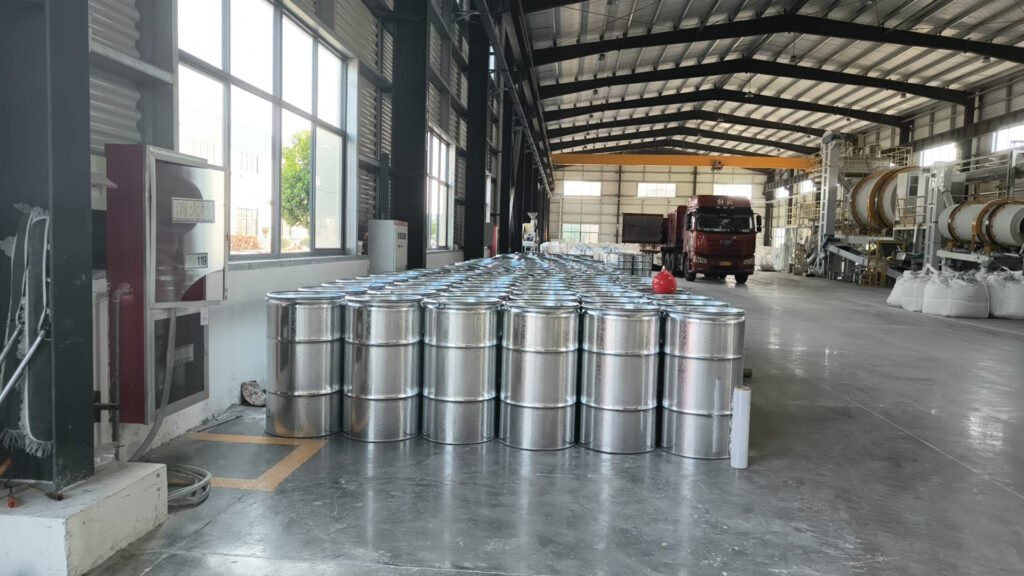
I once visited a new client whose oxygen generator failed after just one year. The machine was from a reputable brand, so they were stumped. When we opened the adsorption tanks, the problem was obvious. The molecular sieves had crumbled into a fine powder, clogging the entire system. They had sourced the cheapest sieve material they could find, and it cost them their entire machine. This is why we invested RMB 8 million in our production line. Quality is not a feature; it is the foundation.
The Importance of Mechanical Strength
Many manufacturers use a "sugar-coating pan" process to form sieve pellets. This results in uneven sizes and very low crush strength. Our factory uses a modern granulator-based forming process. This gives our sieves a uniform particle size and much higher mechanical strength.
- Less Dust: Stronger beads don't break down from the constant pressure swings in a PSA system. Dust is the number one enemy of an oxygen generator. It clogs filters, damages expensive valves, and can even destroy the compressor.
- Better Airflow: Uniform beads create a bed with consistent airflow, preventing "channeling" where air bypasses the sieve material. This ensures every bead is used effectively.
The Impact of Adsorption Capacity
A superior production line, aligned with international standards, creates a more perfect crystal structure in the zeolite.
- Higher Purity: A better sieve has a higher dynamic adsorption capacity for nitrogen. This directly translates to higher oxygen purity at the outlet.
- Greater Efficiency: When your sieve can adsorb more nitrogen per cycle, your generator doesn't have to work as hard. This saves a significant amount of energy over the life of the machine.
When and How Should You Replace the Molecular Sieves in Your Oxygen Generator?
Your oxygen purity is dropping, and you're not sure what to do. Ignoring the problem can lead to a complete system failure and costly downtime. Let's walk through the signs.
You should plan to replace your molecular sieves when you see a significant, persistent drop in oxygen purity that basic maintenance can't fix. The process involves safely depressurizing the system, removing the old material, and refilling with a high-quality replacement.
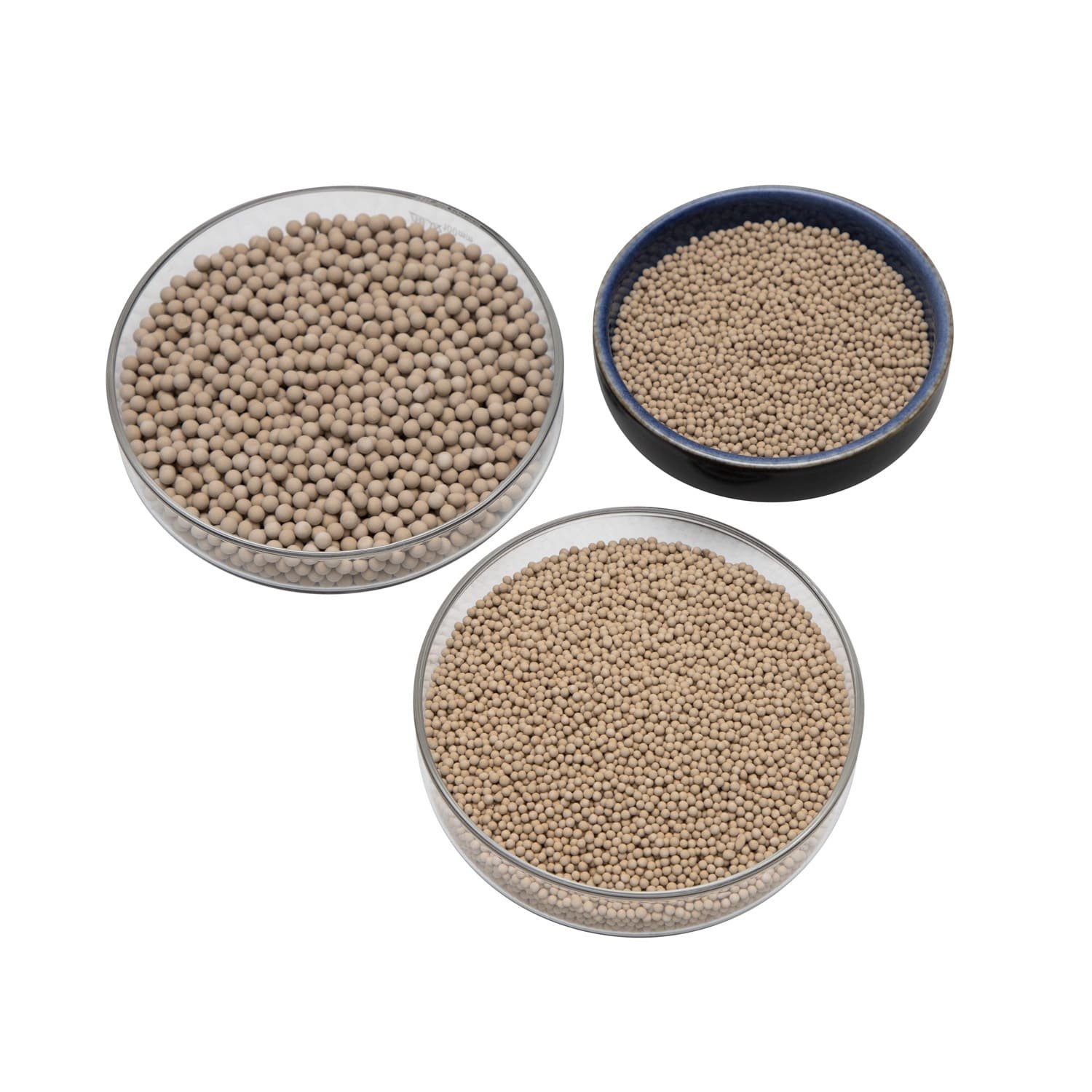
As an OEM/ODM supplier for global brands, we know that product performance in the field is everything. The lifetime of a molecular sieve isn't infinite. It typically lasts for several years, but performance will eventually decline. Knowing when to act is key to maintaining your operations without interruption.
Key Signs It's Time for a Replacement
Look out for these clear indicators:
- Falling Oxygen Purity: This is the most obvious sign. If your generator, which used to produce 93% oxygen, is now struggling to get above 90%, the sieve's adsorption capacity is likely diminished.
- Shorter Cycle Times: If you notice the generator is switching between adsorption towers more frequently, it means the sieve is becoming saturated with nitrogen faster than before. It can no longer hold as much nitrogen, so it needs to regenerate more often.
- Increased Energy Use: Is the generator consuming more power to produce the same volume of oxygen? This is a sign it's working harder to compensate for degraded sieve material.
The Replacement Process
While the exact steps depend on your generator's design, the general process is straightforward but must be done correctly.
- Safety First: The system must be completely shut down and depressurized.
- Evacuation: The old, degraded sieve material must be completely removed from the tanks. This includes any dust and fines at the bottom.
- Refilling: The new molecular sieve beads must be loaded carefully to ensure a densely packed bed. This prevents air from channeling around the beads, which would render the new material useless.
If you are a distributor or an enterprise developing your own brand of oxygen generators, providing your customers with high-quality, long-lasting sieves is a major competitive advantage. We are here to be your stable, long-term partner in that goal.
Conclusion
The molecular sieve is the heart of your oxygen generator. Choosing a high-quality sieve ensures high oxygen purity, extends your equipment's life, and improves overall efficiency.