Choosing the wrong molecular sieve can ruin your entire process. This mistake leads to poor performance, contamination, and wasted money. Understanding the basic classifications is key to success.
Molecular sieves are primarily classified in two ways: by their chemical composition (the silica-to-alumina ratio) and by their physical structure (pore size). These two factors determine the sieve's properties and what specific job it is best suited for, from simple drying to complex catalysis.
I've been in this business for over 20 years, and I've seen how a small detail like sieve selection can make or break a project. It might seem technical at first, but the logic behind it is quite straightforward. Let's break down the most important ways we classify these amazing materials, so you can feel confident in your choice. It all starts with the basic chemical recipe.
How Does the Silica-to-Alumina Ratio (SAR) Define a Molecular Sieve's Role?
You see terms like "Type A" or "high-silica," but what do they mean for performance? This confusion can lead to selecting a sieve that fails in your specific chemical environment.
The Silica-to-Alumina Ratio (SAR) is the key. It determines a sieve's core properties like stability, acid resistance, and whether it prefers water (hydrophilic) or organics (hydrophobic). Low SAR is for drying, high SAR is for catalysis and separating organics.
The SAR is the foundation of a molecular sieve's personality. In our factory, we carefully control this ratio because it dictates everything the final product can do. A low ratio means more aluminum, which creates a strong polarity that aggressively attracts water. As we increase the silica, the sieve becomes less interested in water and more stable in harsh, acidic conditions. This is where the real power of customization comes in. We can fine-tune the SAR to create the perfect material for a specific industrial challenge.
Low SAR Sieves (Type A, X, Y)
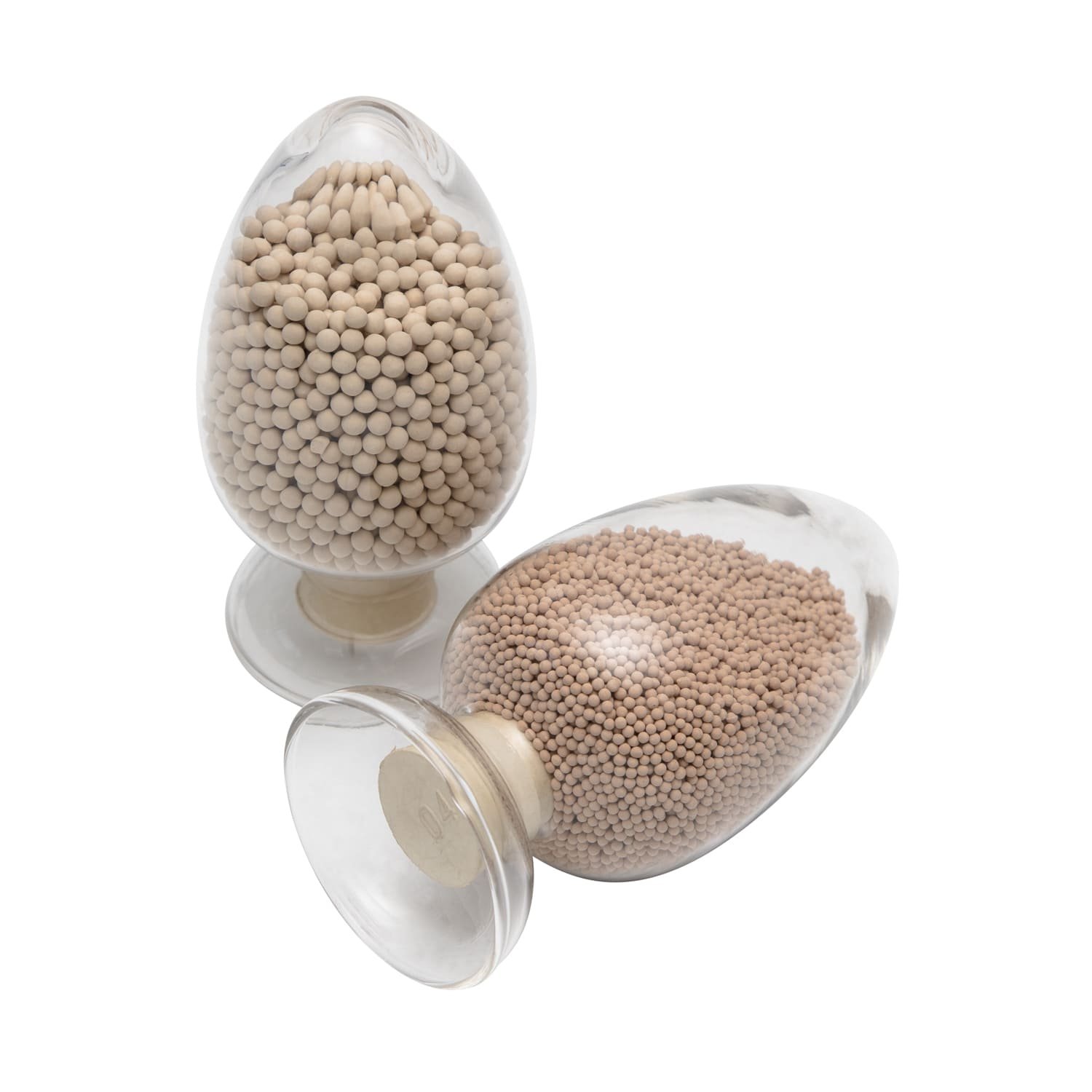
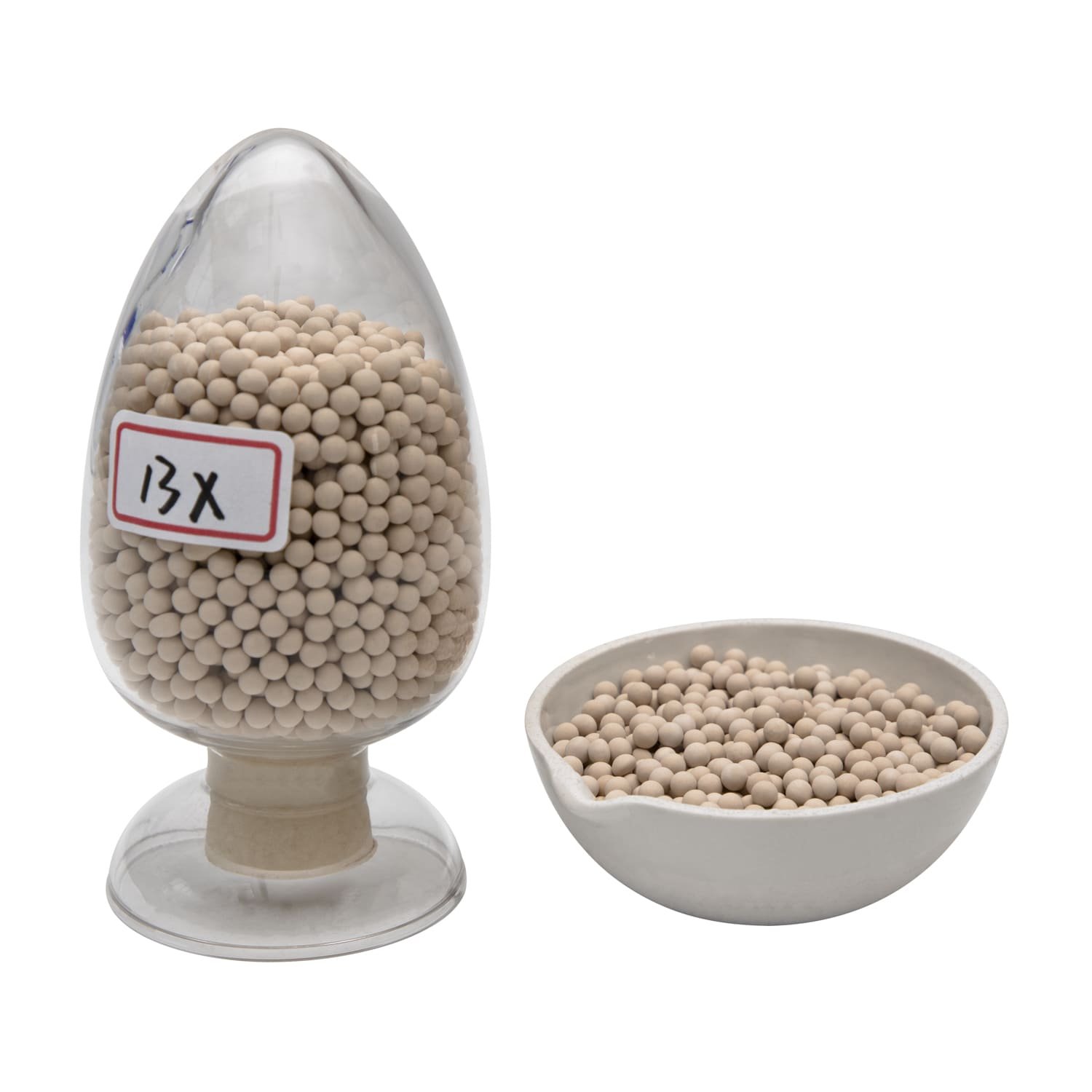
These are the workhorses for adsorption and drying. Their structure has a strong affinity for polar molecules like water. Type A sieves (3A, 4A, 5A) are classics for deep drying applications. Type X and Y have slightly larger pores and are critical in catalysis, especially in the oil industry. We produce tons of these because they are essential for so many foundational processes.
High SAR Sieves (e.g., ZSM-5)
When you need a sieve to work in water but not adsorb it, you turn to high-silica versions. These are hydrophobic, or "water-fearing." Their stability in high temperatures and acidic environments makes them stars in shape-selective catalysis, like turning methanol into gasoline. They can precisely "shape" the final product molecules.
| SAR Level | Key Property | Common Types | Primary Application |
|---|---|---|---|
| Low | Hydrophilic (Loves Water) | 3A, 4A, 5A, 13X | Drying, General Adsorption |
| Medium | Less Hydrophilic | Y-Type | Fluid Catalytic Cracking (FCC) |
| High | Hydrophobic (Hates Water) | ZSM-5, Silicalite-1 | Shape-Selective Catalysis, Organic Separation |
Why Does Pore Size Determine a Molecular Sieve's Function?
You know you need to separate molecules, but how do you pick the right "net"? Using a sieve with the wrong pore size means you either capture nothing or capture everything, failing the separation.
Pore size acts as a physical gatekeeper, only allowing molecules smaller than its openings to pass through and be adsorbed. This simple mechanism is the basis for separation. Sieves are classed as small, medium, or large-pored to target specific molecules.
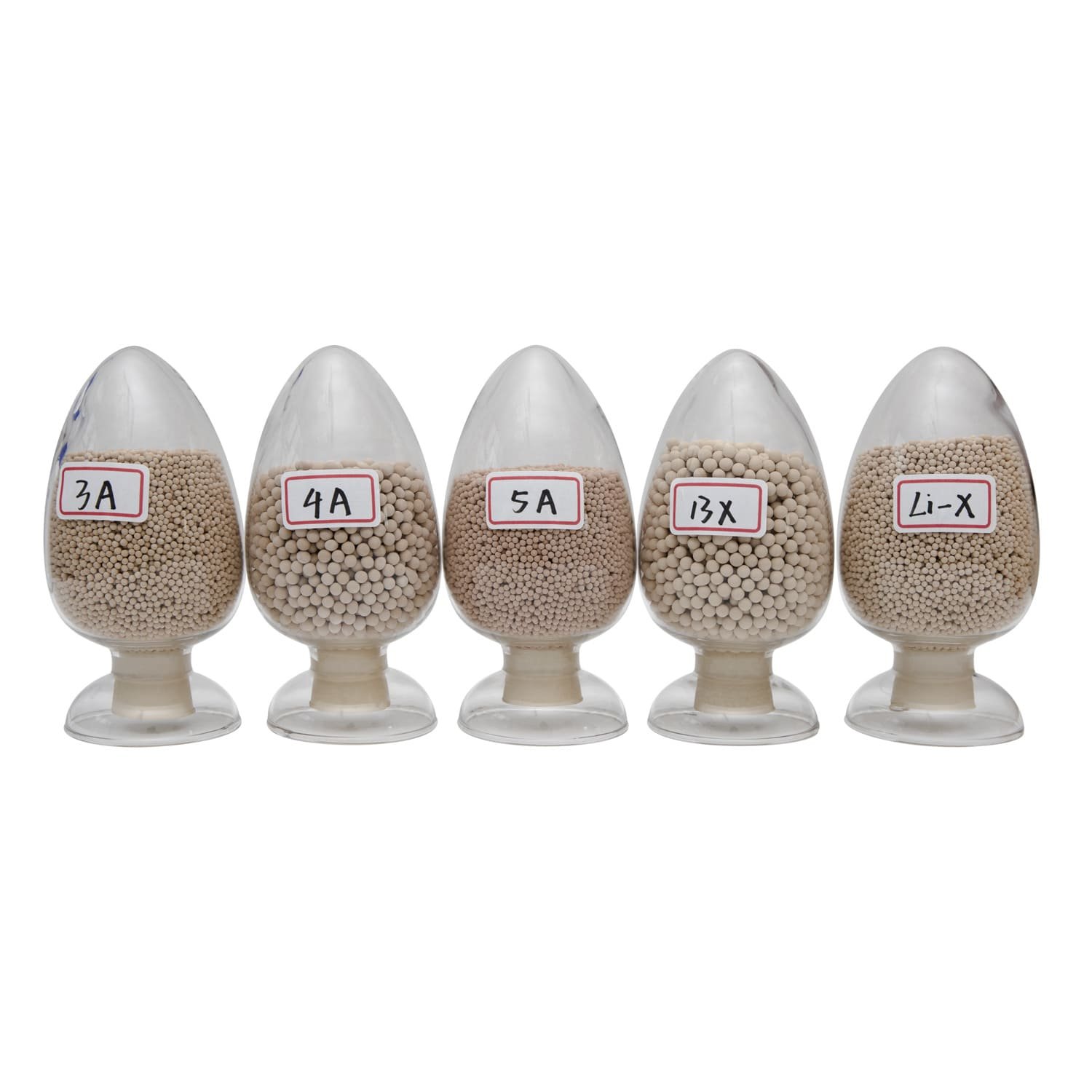
I often explain this to clients using a simple analogy: it’s like a coin sorter. You have openings of different sizes, and only the right-sized coin can fall through. In our world, the "coins" are molecules. The International Zeolite Association (IZA) even has a code for each structure, defining this precise architecture. Getting the pore size right is the most critical step for any separation process. It's the difference between purifying natural gas efficiently and having a system that simply doesn't work. That's why our production lines are so advanced—to ensure every bead has a uniform, precise pore size.
Small and Medium Pore Sieves
These are the most common types. Small-pore sieves like 3A and 4A have openings around 0.3 to 0.45 nanometers, perfect for grabbing tiny water molecules while letting larger ones like ethanol pass. Medium-pore sieves like 5A (0.5 nm) are incredibly versatile, used for things like separating n-paraffins from iso-paraffins in the petroleum industry.
Large and Mesoporous Sieves
For bigger jobs, you need bigger pores. Large-pore sieves like Type X and Y have openings around 0.7 to 0.8 nanometers, allowing them to handle the larger molecules involved in cracking heavy oil. The newest frontier is mesoporous materials, with pores from 2 to 50 nanometers. They open up exciting possibilities for processing very large molecules, like those in pharmaceuticals and biofuels.
| Pore Class | Size (approx.) | Common Types | Core Use Case |
|---|---|---|---|
| Small-Pore | 0.3 - 0.45 nm | 3A, 4A | Drying small molecules (water, ammonia) |
| Medium-Pore | 0.45 - 0.6 nm | 5A | Natural gas purification, paraffin separation |
| Large-Pore | 0.7 - 0.8 nm | X-Type, Y-Type | Heavy oil cracking, large molecule catalysis |
| Mesoporous | 2 - 50 nm | MCM-41, SBA-15 | Biomolecule immobilization, specialty catalysis |
Conclusion
Choosing the right molecular sieve comes down to understanding its SAR and pore size. This ensures you get the perfect material for your specific separation, drying, or catalytic needs.