Skip to content
Struggling with moisture in your sensitive products? Using the wrong desiccant can contaminate entire batches, costing you time and money. The solution lies in understanding what makes a 3A sieve truly effective.
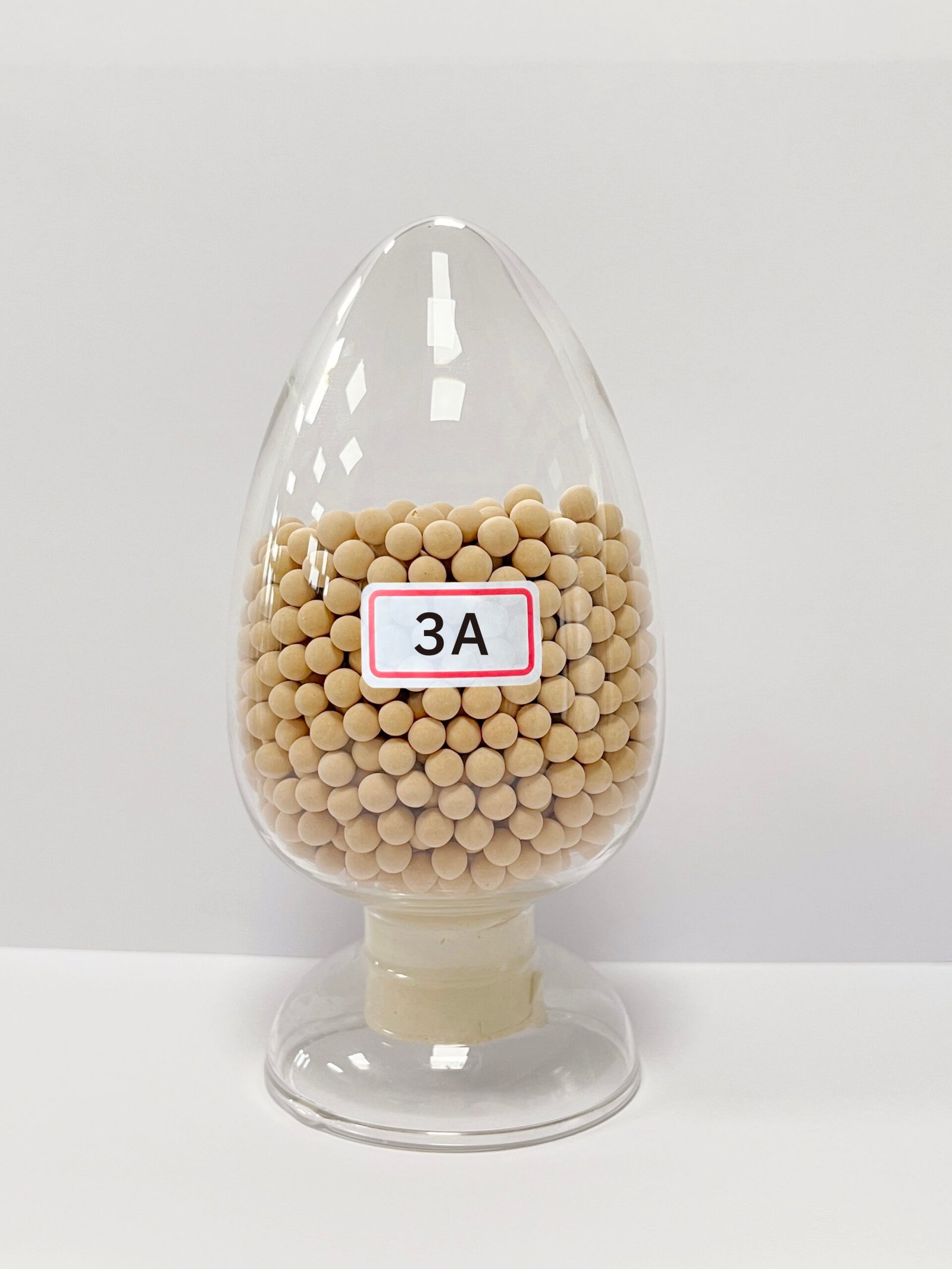
A high-quality 3A molecular sieve[^1] works because of its precise 3Å pore size, which only adsorbs water. But its true performance is defined by its ion exchange degree[^2]. A high degree ensures it won't adsorb your valuable product, guaranteeing process purity and efficiency.
I've been in the chemical industry for over 20 years, and I've seen it all. A client comes to us after their process failed, wondering why the "3A" sieve they bought from another supplier wasn't working. They look at the specs—particle size[^3], crush strength[^4]—and everything seems fine. But the real problem is often hidden in a detail most people don't even know to ask about. It’s a simple factor, but it makes all the difference between success and failure. Let’s dive into what that is, so you can avoid these costly mistakes and choose the right product with confidence.
What Are the Core Applications for 3A Molecular Sieves?
You need to dry sensitive materials like ethanol or refrigerants. But using a general-purpose desiccant can ruin your product by adsorbing more than just water. A 3A molecular sieve[^1] is specifically designed for this.
3A molecular sieve[^1]s are mainly used for deep drying[^5] where only water must be removed. They are perfect for drying ethanol, refrigerants, and unsaturated hydrocarbons like ethylene. Their 3Å pores are too small to adsorb the larger product molecules, ensuring purity.

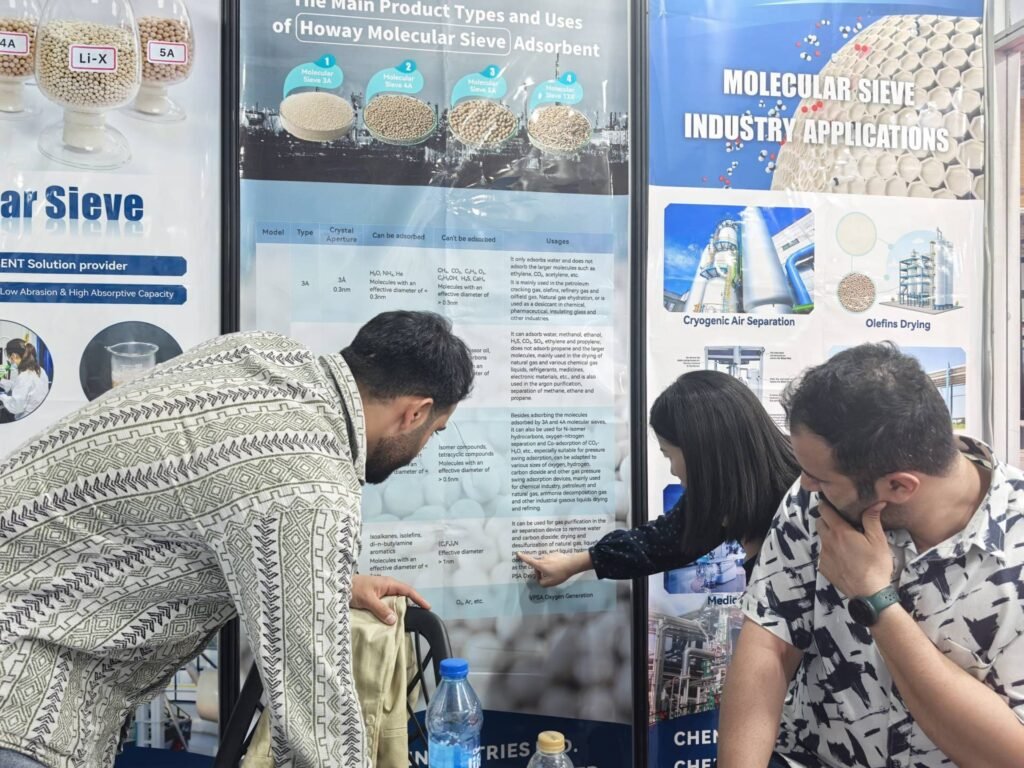
A 3A molecular sieve[^1]'s power comes from its unique structure. Its main component is potassium sodium silicoaluminate, which creates a crystal with a very specific pore opening of about 3 angstroms (0.3 nanometers). This tiny opening is the key. It’s just large enough to let small water molecules in but blocks larger molecules.
Drying Polar Liquids
In processes involving polar liquids like ethanol, you want to remove water without losing your valuable alcohol. A 3A sieve is the perfect tool for this. It traps the water and lets the ethanol pass through untouched. This is critical in the pharmaceutical and fine chemical industries.
Drying Unsaturated Hydrocarbons
Industries working with gases like ethylene, propylene, or butadiene need them to be extremely dry. These are the building blocks for many plastics and chemicals. Any moisture can disrupt the polymerization process. 3A sieves provide that deep drying without reacting with or adsorbing the hydrocarbons.
Dehydration in Refrigeration
Moisture is the enemy in a cooling system. It can freeze and cause blockages or react with refrigerants to form corrosive acids. 3A sieves are used inside filter-driers to capture any trace moisture, protecting the compressor and extending the life of the entire system.
| Application Area | Target to Remove | Product to Preserve | Why 3A is Ideal |
|---|---|---|---|
| Petrochemicals | Water | Ethylene, Propylene, Butadiene | Pores are too small to adsorb hydrocarbons. |
| Solvent Dehydration | Water | Ethanol, Methanol | Selectively adsorbs water, not the alcohol. |
| Refrigerant Drying | Water | R134a, R410A, etc. | Prevents ice formation and acid corrosion. |
| Natural Gas Processing | Water | Natural Gas, Cracked Gas | Provides deep drying to meet pipeline specs. |
One more thing to remember is that these sieves can be regenerated. By using high temperatures or a vacuum, you can remove the captured water and use the sieve again, making it a cost-effective solution for large-scale industrial use.
Why Do Most People Overlook the Ion Exchange Degree in 3A Sieves?
You bought a 3A sieve, but your process isn't as pure as you expected. It feels like the sieve is adsorbing some of your product, not just water. The problem is likely the ion exchange degree[^2].
The ion exchange degree[^2] is a critical quality metric that many buyers miss. A higher degree means the sieve is more purely "3A," which reduces the unwanted adsorption of other molecules. This directly impacts the purity of your final product and the sieve's efficiency.

When I talk with new clients, they almost always focus on particle size[^3] and crush strength[^4]. Those are important, but they don't tell the whole story. I often have to explain the concept of the ion exchange degree[^2]. It’s the single most important factor for the performance of a 3A molecular sieve[^1], especially in sensitive liquid-phase applications[^6].
What is Ion Exchange?
A 3A molecular sieve[^1] actually starts its life as a 4A molecular sieve. The 4A material has a pore size of 4 angstroms. To make it a 3A sieve, we have to swap some of the sodium ions in the crystal structure with smaller potassium ions. This process is called ion exchange. The "ion exchange degree[^2]" tells you how complete that swap was.
The Impact of a Low Degree
If the ion exchange degree[^2] is low, it means not enough sodium ions were replaced with potassium ions. The result? The sieve will still have some 4-angstrom pores mixed in with the 3-angstrom pores. These larger pores can and will adsorb molecules you want to keep, like ethanol. This is called co-adsorption, and it reduces the purity of your final product. For example, when drying ethanol, a low-grade 3A sieve might adsorb some of the ethanol along with the water.
Our Quality Standard
A basic, low-quality 3A sieve might have an ion exchange degree[^2] below 45. It might work for simple gas drying, but it will fail in more demanding jobs. At our factory, we ensure our standard 3A molecular sieve[^1] has an ion exchange degree[^2] of over 45. For special applications, particularly in liquid-phase drying, we produce grades with a degree of over 60 to guarantee performance and protect our customers' products.
| Ion Exchange Degree | Pore Structure | Performance Outcome | Recommended Use |
|---|---|---|---|
| Low (<45) | Mix of 3Å and 4Å pores | High risk of co-adsorption[^7], lower product purity. | Not recommended for sensitive applications. |
| Standard (>45) | Mostly 3Å pores | Good selective adsorption, reliable for most uses. | General gas and liquid drying. |
| High (>60) | Almost exclusively 3Å pores | Minimal co-adsorption[^7], maximum product purity. | Demanding liquid-phase and high-purity uses. |
So next time you source 3A molecular sieve[^1]s, ask about the ion exchange degree[^2]. A good supplier will know exactly what you're talking about.
How Can You Avoid Common Mistakes When Buying 3A Molecular Sieves?
Choosing a supplier can feel like a gamble. You worry that a bad choice will lead to production failures and wasted investment. The best way to avoid this is to look beyond the basic specs.
To choose the right 3A sieve, don't just compare particle size[^3] and strength. Ask your supplier for the ion exchange degree[^2]. A knowledgeable supplier will understand your application and recommend the correct grade, ensuring you avoid costly performance issues.
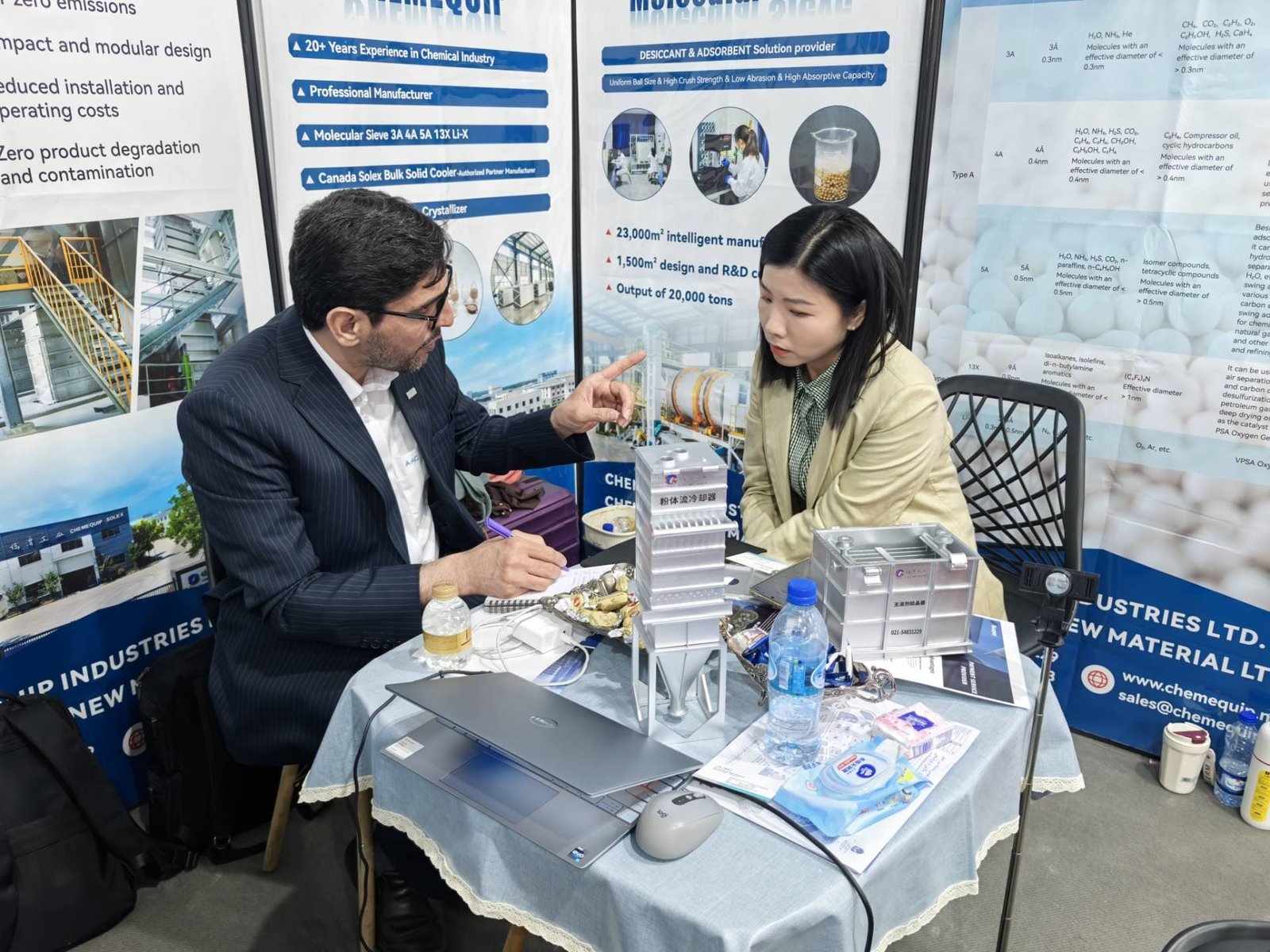
I've learned that buying a technical product like a molecular sieve is not just about the product itself. It's about partnering with a manufacturer who understands how it's used. A factory that only knows how to produce but not how to apply the product is a huge risk for the buyer. You might get a product that meets a basic data sheet but fails in your real-world process.
Beyond Particle Size and Strength
Everyone asks for the size and strength. But as we've discussed, the ion exchange degree[^2] is far more important for 3A sieves. You should also consider the production method. Was it made using a modern granulator process or an outdated sugar-coating pan method? A better process results in higher strength, more uniform size, and less dust, all of which contribute to a longer service life and a cleaner operation for you.
Liquid vs. Gas Phase Applications
You must also tell your supplier if you are using the sieve in a liquid or a gas. Liquid-phase applications are much more demanding. The sieve is constantly immersed, and the potential for co-adsorption[^7] is higher. This is where a high-quality sieve with a high ion exchange degree[^2] becomes absolutely essential. Using a cheap, low-grade sieve in a liquid drying process is a recipe for disaster.
Questions to Ask Your Supplier
To protect yourself, treat the buying process like an interview. A good supplier will welcome your questions.
Here are some things you should ask:
- What is the ion exchange degree[^2] of your 3A molecular sieve[^1]?
- Can you provide different grades for different applications (e.g., liquid vs. gas)?
- What is your production process? Do you use a granulator?
- What quality control measures do you have in place to ensure consistency?
- Can you share case studies or experience related to my specific application?
Choosing a supplier who can confidently answer these questions is the best way to avoid problems. You are not just buying a product; you are buying expertise and reliability.
Does the Production Process Really Affect Your Molecular Sieve's Quality?
All molecular sieve beads look pretty much the same. But then you notice that some create a lot of dust, break easily, and fail quickly in your system. The reason is the manufacturing process.
Yes, the production process directly impacts quality. Our modern granulator-based forming, unlike the old sugar-coating pan method, creates more uniform particles with higher mechanical strength and less dust. A superior production line is the foundation of a premium, reliable molecular sieve.

When we decided to build our new production line, we invested over 8 million RMB. Why? Because we knew that to make a world-class product, we needed a world-class process. An expert in our industry visited our facility and said, "A superior production line is the foundation of premium products." I couldn't agree more. Let me explain what this means for you.
The Old Way: Sugar-Coating Pan Process
Many manufacturers in China still use what is essentially a "sugar-coating pan" process. This method is cheap, but the results are inconsistent. The particles are often not uniform in size, and the layered structure makes them weaker and more likely to generate dust.
The Modern Way: Granulator-Based Forming
We chose a different path. We use a granulator-based forming process. We mix the molecular sieve powder with a binder. Each bead is a solid, homogenous particle, This advanced process requires a much larger investment in equipment, but the benefits are huge.
What This Means for You
The beads from our process are much stronger and more resistant to crushing. This means they last longer in your adsorption towers, even under high pressure. They are also extremely uniform in size, which ensures consistent flow dynamics and predictable performance. Most importantly, they generate far less dust. Less dust means you don't have to worry about downstream filters clogging or your final product getting contaminated.
| Feature | Sugar-Coating Pan Process | Granulator-Based Forming (Our Process) | Your Advantage |
|---|---|---|---|
| Particle Structure | Layered, like an onion | Solid, homogenous | Higher mechanical strength, longer service life. |
| Uniformity | Inconsistent size | Highly uniform size | Predictable pressure drop and performance. |
| Dust Generation | High | Very low | Cleaner operation, no clogged filters or valves. |
| Initial Cost | Lower | Higher | Better long-term value and reliability. |
Investing in a better production line was a clear choice for us. It allows us to provide our B2B partners—global brands, distributors, and importers—with a product that is stable, reliable, and truly premium.
Conclusion
In summary, a top-tier 3A molecular sieve[^1] depends on its high ion exchange degree[^2] and a superior production process. Choosing an expert supplier ensures you get the right product.
[^1]: Understanding the function of a 3A molecular sieve is crucial for effective moisture control in sensitive products. [^2]: Learn how the ion exchange degree affects the performance and purity of molecular sieves in various applications. [^3]: Discover how particle size influences the performance and efficiency of molecular sieves. [^4]: Learn about crush strength and its significance for the durability of molecular sieves. [^5]: Explore the concept of deep drying and its importance in industries using molecular sieves for moisture control. [^6]: Discover the unique challenges and requirements for using molecular sieves in liquid-phase applications. [^7]: Understanding co-adsorption is key to ensuring product purity when using molecular sieves.