Skip to content
Struggling to pick the right adsorbent for CO2 removal? The wrong choice leads to poor performance and high costs. Let's clarify which is best for your specific application.
For high CO2 concentrations (>1%) and wet gas, activated carbon[^1] is often better. For trace CO2 removal (<1%) in dry gas[^2] streams requiring high purity, 13X molecular sieves[^3] are the superior choice. The decision depends on concentration, moisture, and purity goals.
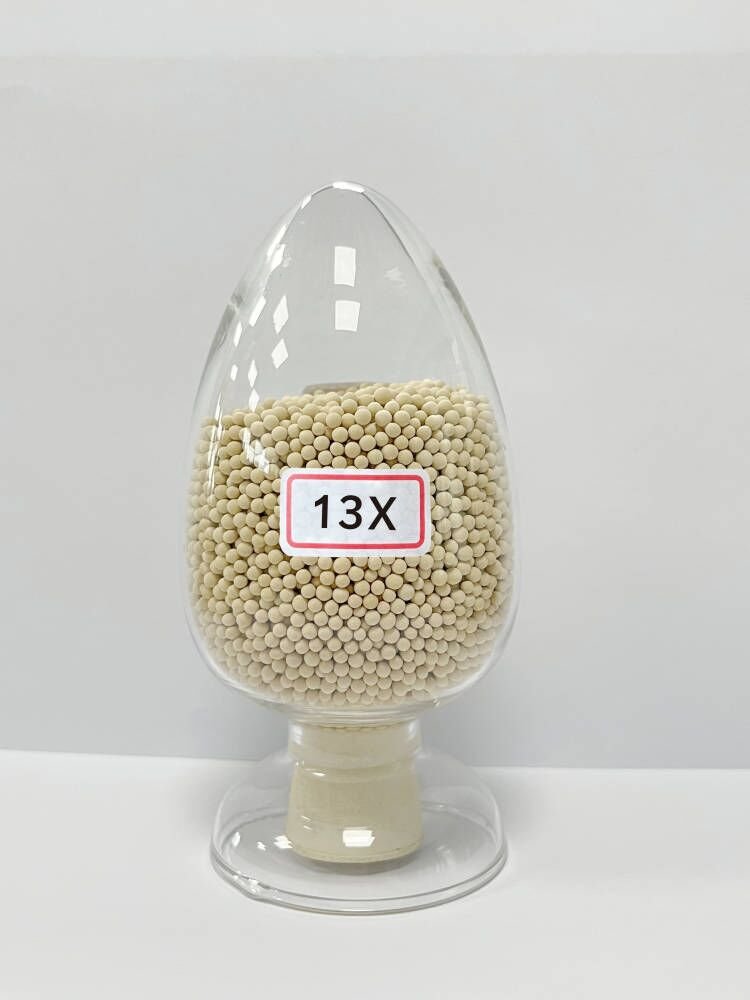
Choosing between these two excellent adsorbents can be tricky. It's not about which one is "better" overall, but which one is right for your specific job. I've spent years helping clients make this exact decision. Let's break it down into simple, practical factors so you can choose with confidence. The first thing we need to look at is the amount of CO2 you're dealing with.
Does the CO2 concentration in your gas stream matter?
Is your process failing to remove CO2 efficiently? Using the wrong adsorbent for your CO2 concentration is a common reason. Let's match the right material to your gas stream.
Yes, concentration is critical. For high concentrations of CO2 (above 1%), activated carbon[^1] is typically more cost-effective. For low, trace concentrations (below 1% or ppm levels), 13X molecular sieves[^3] offer the high efficiency and deep removal needed for purification.

I often tell my clients to think of it like this: activated carbon[^1] is a bulk remover, while a molecular sieve is a precision tool. Activated carbon has a broad range of pore sizes and a large surface area. This makes it great for capturing large volumes of CO2 when there's a lot of it around. It's like using a large net to catch many fish. However, when you need to remove the last few traces of CO2 to achieve ultra-high purity, the selective nature of a 13X molecular sieve is unmatched. Its uniform 10-angstrom pores are perfectly sized to trap CO2 molecules. This is why for applications like air separation pre-purification, where even tiny amounts of CO2 can cause big problems, we always recommend a 13X molecular sieve.
| Feature | Activated Carbon | 13X Molecular Sieve |
|---|---|---|
| Best for CO2 % | > 1% (High Concentration) | < 1% (Trace/Low Concentration) |
| Mechanism | General adsorption | Selective adsorption |
| Typical Use | Bulk gas cleanup | High-purity gas purification |
| Analogy | Large fishing net | Precision tweezers |
What if your gas stream contains a lot of water?
Worried that moisture will ruin your adsorbent's performance? Water can quickly saturate some materials, making them useless for CO2 removal. Here's how to choose based on your gas humidity.
If your gas stream is wet or has high humidity, activated carbon[^1] is the safer choice. Molecular sieves are extremely hydrophilic[^4] and will preferentially adsorb water over CO2. Use molecular sieves only when the gas is already dry or has been pre-dried.

This is a really important point I've seen trip people up. Molecular sieves, especially our 13X-APG and 13X-HP types, are powerful desiccants. They love water. If you put them in a wet gas stream, they will get completely saturated with water molecules first. This leaves no capacity to adsorb CO2. Activated carbon, on the other hand, is hydrophobic[^5]. It doesn't attract water as strongly. This makes it a much better choice for treating humid gas streams where CO2 is the target. In many industrial processes, we design a two-step system. First, a drying unit removes the water. Then, the dry gas[^2] flows to a second bed containing a 13X molecular sieve for high-efficiency CO2 removal. This ensures the 13X sieve works at its peak performance without interference from moisture.
| Condition | Recommended Adsorbent | Reason |
|---|---|---|
| Wet Gas / High Humidity | Activated Carbon | Hydrophobic nature; doesn't get saturated by water easily. |
| Dry Gas / Pre-dried | 13X Molecular Sieve | Hydrophilic; water must be removed first to allow for CO2 adsorption. |
| Best Practice | Pre-dry gas[^2], then use 13X Sieve | Maximizes efficiency by removing water before CO2 adsorption. |
Are you trying to remove only CO2 or other impurities too?
Does your gas stream have more than just CO2 to remove? Choosing a highly selective adsorbent might mean other contaminants get through. Let's decide if you need a broad or a targeted solution.
For removing a mix of impurities like VOCs, odors, and other large organic molecules along with CO2, activated carbon[^1] is ideal. If your single goal is high-purity removal of only CO2, a 13X molecular sieve is the far more precise and effective choice.

This comes down to selectivity. Activated carbon is not very selective. It has a wide distribution of pore sizes and will adsorb a whole range of different molecules. It's a great general-purpose purifier. Think of it when you're cleaning up biogas or industrial exhaust. You want to remove a cocktail of unwanted stuff. In contrast, our 13X molecular sieves[^3] are engineered for precision. With their uniform 10-angstrom pore openings, they are highly selective for CO2. This is critical in applications like producing high-purity hydrogen or upgrading biomethane to pipeline quality. In these cases, you only want to remove CO2 and maybe H2S, leaving the valuable product gas untouched. Using activated carbon[^1] here would risk adsorbing some of your product, leading to lower yields. Our 13X-HP sieve is perfect for these high-purity systems.
| Goal | Best Adsorbent | Why? |
|---|---|---|
| Remove CO2 + VOCs, Odors | Activated Carbon | Broad-spectrum adsorption. Captures many different impurities. |
| High-Purity CO2 Removal Only | 13X Molecular Sieve | Highly selective. Uniform pores target specific molecules like CO2. |
| Example Application | Industrial exhaust cleanup | PSA hydrogen production |
How do process conditions and costs influence your choice?
Balancing performance requirements with your budget is tough. High upfront costs or high energy use can make a project unfeasible. Let's look at the total cost of ownership.
Activated carbon generally has a lower purchase price and can offer a higher adsorption capacity for CO2 at high concentrations. Molecular sieves have a higher upfront cost and require more energy for regeneration[^6], but are necessary for deep CO2 removal.

As a manufacturer, I always advise clients to look at the whole picture. Yes, the purchase price of activated carbon[^1] is often lower. And because it can hold more CO2 by weight in high-concentration streams, the operational cycle might seem cheaper. However, this is only true if your process can tolerate some CO2 slip. Molecular sieves, like those from our advanced production line, come with a higher initial investment. Their regeneration process, which involves heating to drive off the adsorbed CO2, also consumes more energy. But for applications demanding near-complete CO2 removal, there is no substitute. The value they deliver in product purity far outweighs the cost. For example, in cryogenic air separation[^7], failing to remove CO2 down to ppm levels will cause it to freeze and block the equipment. The cost of that failure is far greater than the cost of the right adsorbent.
| Factor | Activated Carbon | 13X Molecular Sieve |
|---|---|---|
| Purchase Cost | Lower | Higher |
| Regeneration Energy | Lower | Higher |
| Performance Goal | Bulk removal, cost-sensitive | Deep removal, purity-critical |
| Total Cost View | Best for less-demanding jobs | Justified for high-purity, critical systems |
Conclusion
In short, choose activated carbon[^1] for bulk CO2 removal in wet, mixed-gas streams. Opt for 13X molecular sieves[^3] for high-purity, trace CO2 removal in dry gas[^2] applications.
[^1]: Explore the advantages of activated carbon, especially for high CO2 concentrations and wet gas applications. [^2]: Learn why dry gas conditions are crucial for maximizing the efficiency of CO2 removal systems. [^3]: Learn about the precision and efficiency of 13X molecular sieves for trace CO2 removal in dry gas streams. [^4]: Explore the role of hydrophilic properties in adsorbents and their implications for gas treatment. [^5]: Understand the significance of hydrophobic properties in adsorbents and their impact on performance. [^6]: Learn about the energy requirements for regenerating adsorbents and their impact on operational costs. [^7]: Discover the process of cryogenic air separation and the critical role of CO2 removal in its success.