Skip to content
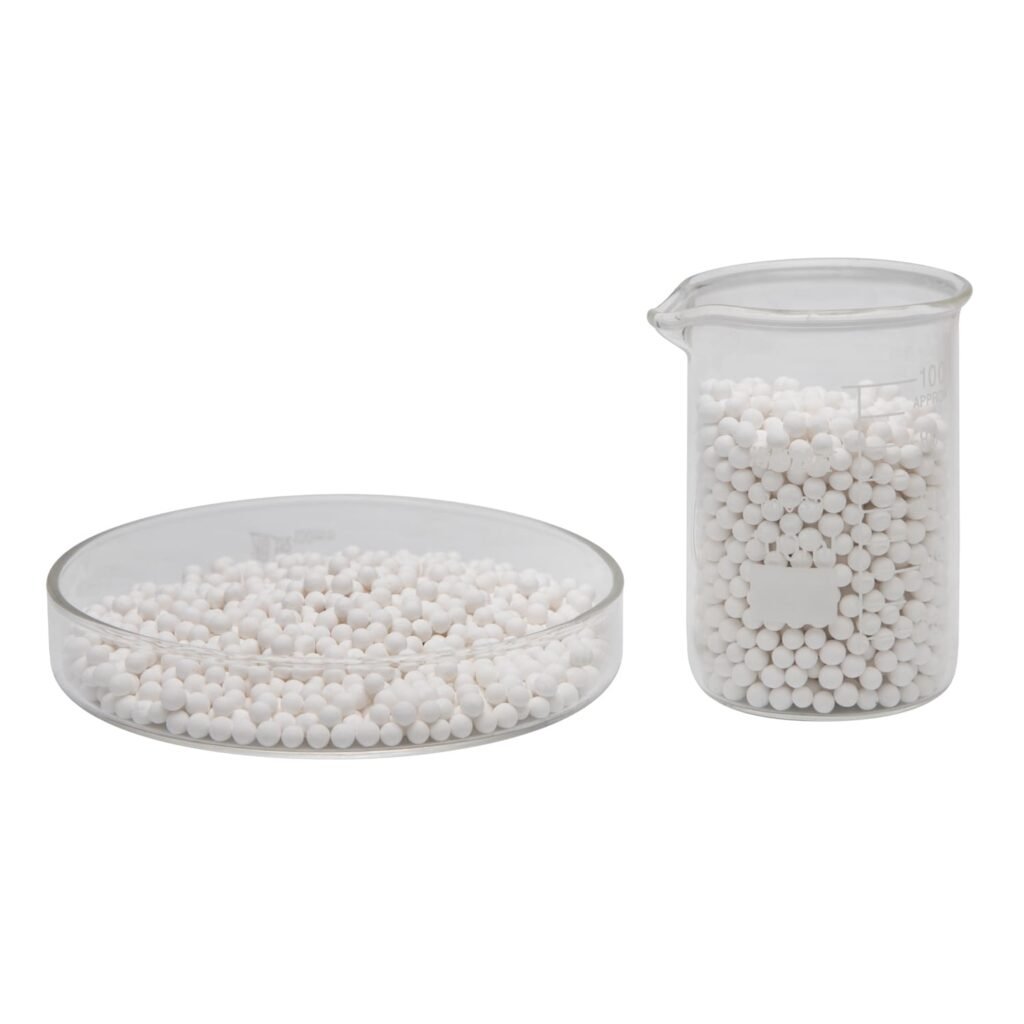
Moisture in your compressed air system causes rust and equipment failure. This leads to costly downtime and repairs. Activated alumina[^1] offers a simple, reliable solution for dry air.
Activated alumina[^1] is essential for desiccant dryers[^2] because it effectively adsorbs water vapor from compressed air. Its high strength, large surface area, and ability to be regenerated make it a durable and cost-effective choice for achieving low dew points[^3] and protecting downstream equipment.

This all sounds great, but how does a simple bead actually work inside a dryer? And are there situations where it's not the only material you need? We need to look closer at these questions. I want to share what I've learned over 20 years in the chemical industry to help you make the best choice for your system. Let's break it down.
How Does Activated Alumina Actually Dry Compressed Air?
You might wonder how a simple bead removes so much water. This lack of clarity can make choosing the right desiccant feel like a guess. Let's look at the science.
Activated alumina[^1] dries air through a process called adsorption[^4]. Its porous structure has a huge internal surface area that attracts and holds water molecules. As wet air passes over the alumina beads, water is trapped in these pores, leaving the air dry. This is a physical process.

Let's dive deeper into how this works in a real-world dryer. It’s more than just beads in a tank. The entire system is designed around this simple but powerful principle.
The Science of Adsorption
The process is called adsorption[^4], not absorption. Water doesn't soak into the bead like a sponge. Instead, water molecules stick to the surface of the millions of tiny pores inside each bead. This happens because of weak forces of attraction. Imagine tiny magnets covering the inside of the alumina, pulling water out of the air. The total surface area inside a single pound of activated alumina can be larger than a football field. This massive area is why it can hold so much water.
The Twin-Tower System
Most industrial desiccant dryers[^2] use a twin-tower design[^5].
- Drying Tower: Wet compressed air flows into the first tower, which is filled with activated alumina. The alumina adsorbs the moisture, and dry air exits the tower to be used in your plant.
- Regenerating Tower: While the first tower is drying, the second tower is regenerating. This tower is already saturated with water from a previous cycle. A portion of the dry air is heated and passed through this second tower. The heat gives the trapped water molecules energy to break free from the alumina. This wet, hot air is then vented.
After a set time, the towers switch roles. The regenerated tower starts drying, and the saturated tower begins regenerating. This continuous cycle provides an uninterrupted supply of dry air.
| Regeneration Method | How It Works | Key Advantage |
|---|---|---|
| Pressure Swing (PSA) | Uses pressure changes. High pressure to adsorb, low pressure to regenerate. | Lower energy use as no heat is required. |
| Temperature Swing (TSA) | Uses heat. The desiccant bed is heated to drive off moisture. | Can achieve very low dew points[^3]. |
| Heated Purge | A common type of TSA. Uses a heater and a small amount of dry "purge" air. | A good balance of performance and efficiency. |
I remember a client whose system was underperforming. They thought the alumina was 'full' and needed replacement. I explained the regeneration cycle[^6], and we found a faulty valve was blocking the hot purge air. It's often the system, not the desiccant itself.
Why Combine Activated Alumina with Other Desiccants?
Is your dryer not hitting that ultra-low dew point you need? Relying on one desiccant type alone can limit performance. A hybrid approach often unlocks maximum drying power.
Combining activated alumina with a molecular sieve[^7] creates a layered bed that optimizes performance and lifespan. The activated alumina, placed at the inlet, handles high moisture loads[^8] and protects the more sensitive molecular sieve[^7], which then polishes the air to a very low dew point.

This is a common strategy we use when helping our OEM partners design high-performance systems. The two materials work together, each playing to its strengths. It's about building a smarter, more robust system.
The Role of a Guard Bed
Think of activated alumina as the first line of defense, or a "guard bed." In a dryer tower, the compressed air enters at the bottom with high force and high moisture content.
- High Strength: Activated alumina[^1] has very high crush strength[^9]. It can withstand the pressure and friction from the incoming air without turning into dust. Dust is a big problem because it can clog the system and increase the pressure drop. Our factory uses a granulator process, not a sugar-coating pan, which results in stronger, more uniform beads with much lower dust.
- High Water Capacity: It excels at removing bulk water. It protects the next layer from being overwhelmed by liquid water, which can damage more sensitive materials.
Achieving Ultra-Low Dew Points
After the activated alumina removes most of the water, the air travels up to the next layer. This is often a molecular sieve[^7], like our 4A type.
- Molecular Sieve's Job: Molecular sieves have smaller, more uniform pore openings. They are like a specialized filter. They are extremely effective at capturing the last remaining water molecules. This allows the system to reach very low dew points[^3], like -40°C or even -70°C.
- Synergy: The activated alumina does the heavy lifting. The molecular sieve[^7] does the fine-polishing. This combination is more effective and economical than using 100% molecular sieve[^7], which is more expensive and less resistant to high moisture.
| Feature | Activated Alumina | Molecular Sieve 4A |
|---|---|---|
| Primary Role | Bulk water removal, guard layer | Dew point polishing |
| Water Capacity | High | Moderate |
| Crush Strength | Very High | Good |
| Cost | Lower | Higher |
| Best Placement | Inlet (bottom of tower) | Outlet (top of tower) |
We often get OEM requests for these layered beds. One brand wanted to market a "high-performance" dryer. We helped them engineer a bed with 70% activated alumina and 30% 4A molecular sieve[^7]. It became their best-selling model because it offered premium performance with great reliability.
What Makes Activated Alumina So Durable and Cost-Effective?
Constantly replacing desiccant is expensive and time-consuming. You need a material that lasts. Activated alumina[^1] is famous for its long service life, but what is the reason for this?
Activated alumina[^1]'s durability comes from its high mechanical strength and its resistance to damage from liquid water. It is cost-effective because it can be regenerated thousands of times with relatively low energy, giving it a long service life and reducing the total cost of ownership.

When we talk to importers and distributors, they don't just ask about the price per ton. They ask about the lifetime value. A strong, reliable desiccant saves money in the long run. It's an investment in operational stability.
Physical Robustness
The physical strength of the desiccant is critical. In a twin-tower dryer, the beads are constantly under pressure changes and thermal stress.
- High Crush Strength: A weak bead will break down into dust. As I mentioned, this dust increases pressure drop, which makes your compressor work harder and use more energy. It can also travel downstream and contaminate your air lines. In our factory, we test this rigorously. Our investment in a top-tier production line with a granulator-based forming process is all about creating a physically superior product. A better production line is the foundation of a premium product.
- Resistance to Water: Sometimes, a slug of liquid water can get past the pre-filters. Activated alumina[^1] can handle this without being destroyed. Other desiccants, like silica gel, can shatter if they come into contact with liquid water. This robustness makes the entire system more forgiving and reliable.
The Magic of Regeneration
The real cost-effectiveness comes from regeneration. You don't use activated alumina once and throw it away. You can reuse it for years. In a typical Temperature Swing Adsorption (TSA) dryer, the process is simple:
- A saturated bed is taken offline.
- A small stream of dry air is diverted from the active tower.
- This air passes through a heater, warming it up to around 150-200°C.
- The hot air flows through the saturated bed, transferring heat to the alumina and the water.
- The water molecules gain enough energy to break free and are carried away as vapor. This cycle can be repeated for 3 to 5 years, or even longer in a well-maintained system.
Calculating Long-Term Value
When choosing a desiccant, don't just look at the initial purchase price. Consider the Total Cost of Ownership (TCO). This includes:
- The initial cost of the material.
- The expected service life.
- The energy cost for regeneration.
- The potential cost of downtime if the desiccant fails. A slightly cheaper, weaker alumina might save you 10% upfront. But it could cost you 50% more in replacements, lost production, and higher energy bills over the next three years. This is why global brands partner with us. They need a stable, long-term partner who provides a product that enhances their own brand's reputation for quality.
Conclusion
Activated alumina[^1] is a powerful, durable, and cost-effective material for drying compressed air. It is a foundational component for reliable operations, especially when used correctly in a well-designed system.
[^1]: Explore the science behind activated alumina to understand its effectiveness in drying compressed air. [^2]: Learn about desiccant dryers and their role in maintaining dry air in various applications. [^3]: Learn about dew points and their significance in ensuring air quality. [^4]: Discover how adsorption works and why it's crucial for effective moisture removal. [^5]: Understand the advantages of twin-tower systems for continuous drying operations. [^6]: Find out how regeneration extends the life of desiccants and maintains efficiency. [^7]: Explore the benefits of combining molecular sieves with activated alumina for optimal performance. [^8]: Discover how varying moisture loads impact the efficiency of desiccants. [^9]: Explore the significance of crush strength in ensuring the durability of desiccants.