
Your adsorption tower is underperforming, and you see dust and pressure drops. This could be your adsorbent breaking down, clogging the system, and killing efficiency. Choosing the right crush strength is key.
High crush strength is vital because it prevents the adsorbent beads or pellets from breaking under the physical stress inside your tower. This stops the formation of dust, which ensures stable operation, prevents blockages, and extends the life of your equipment and the adsorbent itself.
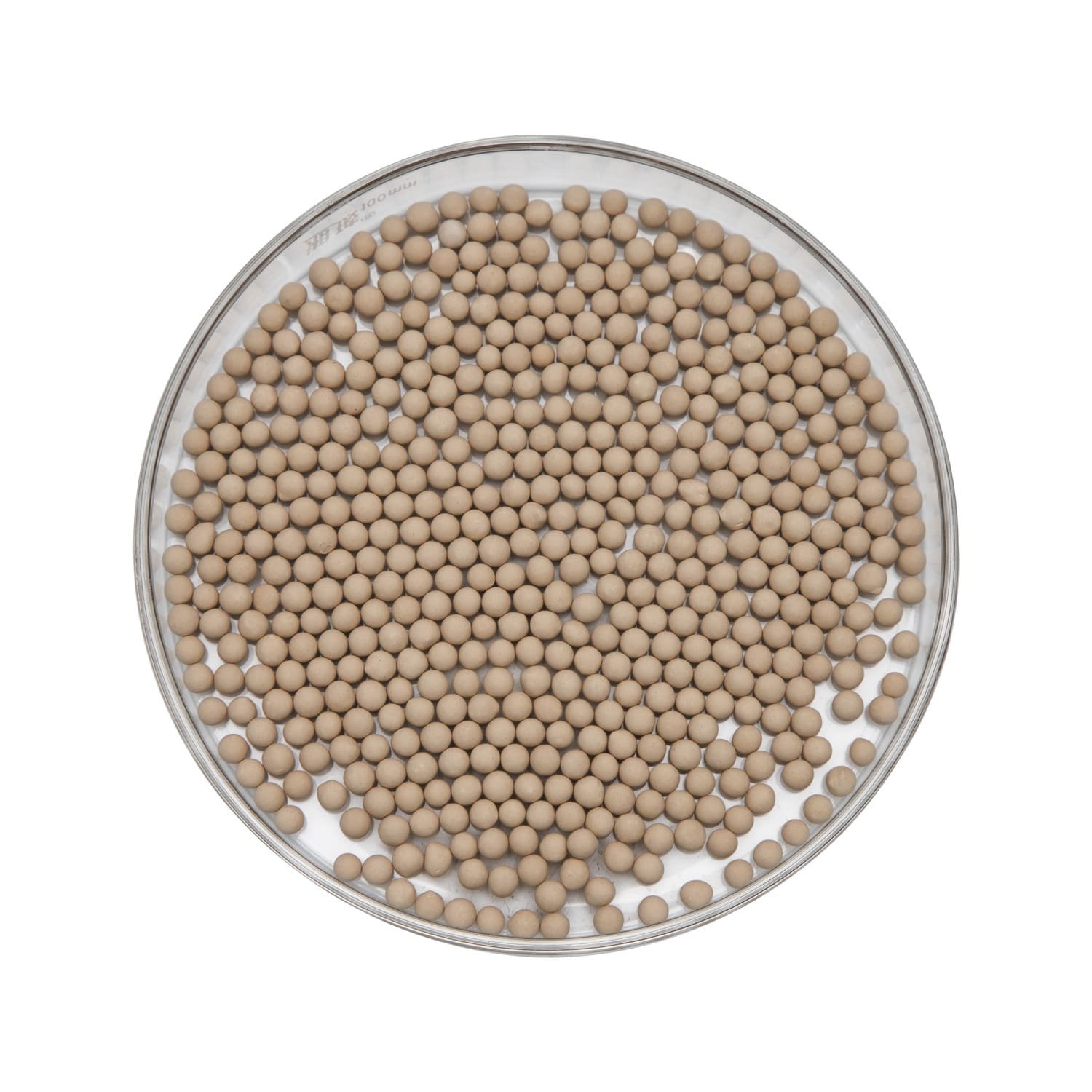
But it's not as simple as just picking the strongest adsorbent you can find. The real secret to long-term, efficient operation is more nuanced than a single number on a data sheet. Let's dive into what crush strength really means for your process and why it's a delicate balancing act that only expert manufacturers get right.
What Exactly Is Crush Strength and How Is It Measured?
Are you confused by technical data sheets? You might wonder what "crush strength" numbers actually mean for your process. You need a clear, simple explanation to make the right choice.
Crush strength is the maximum force a single adsorbent particle can handle before it cracks or breaks. It is usually measured in Newtons (N) per particle. This number tells you how well the adsorbent will resist physical stress inside your adsorption tower.

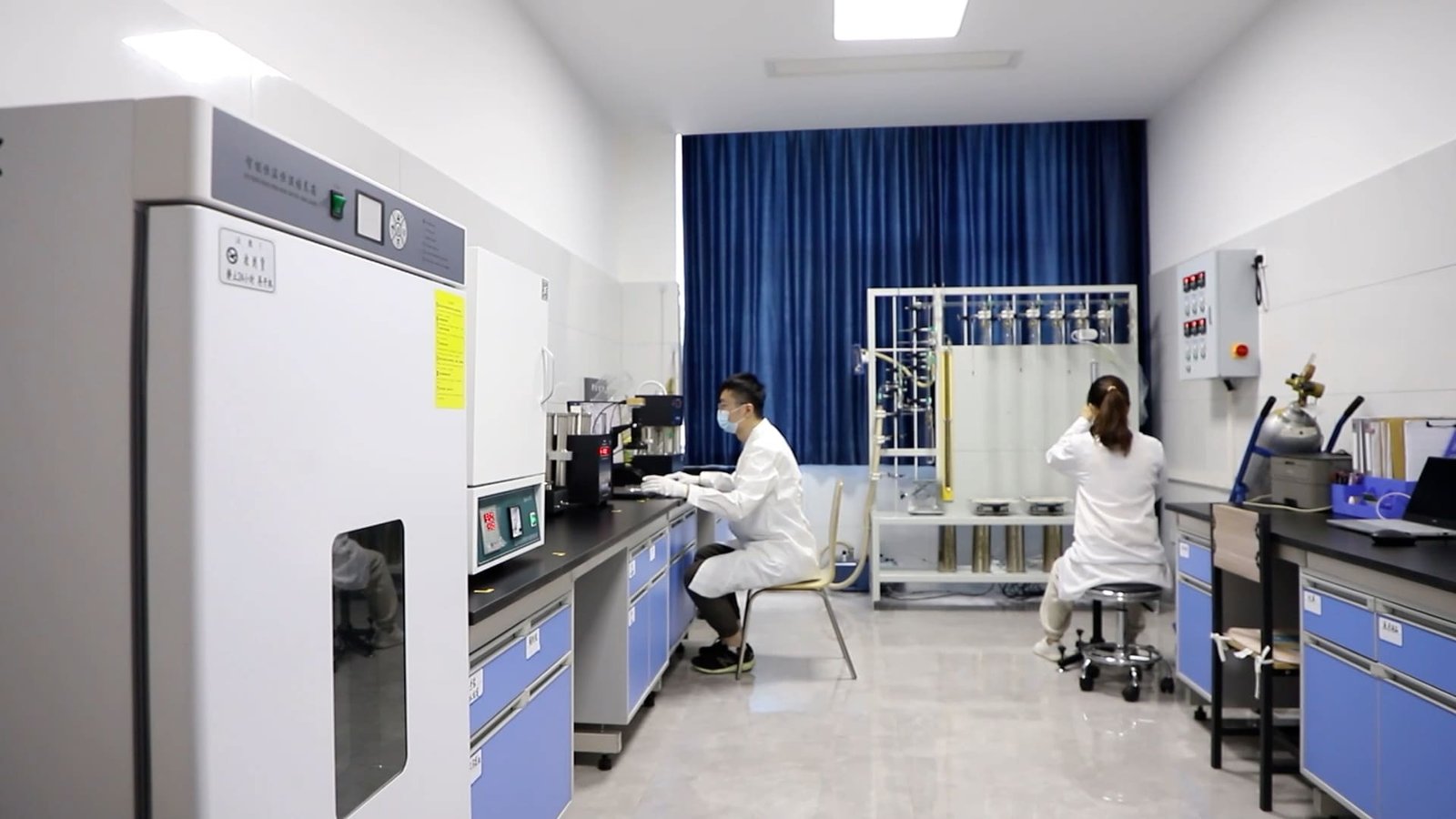
In our quality control lab, we measure this every day. The process is straightforward. We take a single bead of molecular sieve and place it in a specialized machine. The machine then applies a slow, steady pressure until the bead fractures. The force recorded at that exact moment is its crush strength. As a manufacturer with over 20 years of experience, I can tell you that consistency is just as important as the number itself. A batch with a wide variation in crush strength is a red flag. It points to an unstable production process. Our fully automated production lines, a significant RMB 8 million investment, are designed to eliminate this problem. They ensure that every single bead we produce meets a tight and reliable specification. This consistency is the foundation of a premium product that you can depend on.
Typical Crush Strength by Form
| Adsorbent Form | Typical Crush Strength (N/particle) | Key Characteristic |
|---|---|---|
| Spherical (Beads) | 15 - 140 N | Good flow, uniform packing. |
| Cylindrical (Pellets) | 20 - 120 N | Lower pressure drop. |
| Strip Formed | Varies by dimension | Specialized for low pressure drop. |
This consistency gives you peace of mind, knowing the entire adsorbent bed has the strength to perform, not just a few select particles.
How Does Crush Strength Prevent Costly Equipment Failure?
Are you dealing with unexpected shutdowns or high maintenance costs? The cause might be hidden inside your adsorption tower. Your adsorbent could be turning to dust and causing huge problems.
High crush strength directly prevents adsorbent beads from breaking under the weight of the bed and the force of gas flow. This stops the formation of fine dust, which can clog filters, increase pressure drop, and damage downstream equipment.

I remember a client who came to us after a catastrophic failure. Their previous supplier provided a cheap molecular sieve that quickly broke down. The resulting dust traveled through their entire compressed air system. It fouled heat exchangers, clogged pneumatic valve controllers, and contaminated their final product. The downtime and cleanup cost them tens of thousands of dollars. This is a perfect example of what happens when crush strength is overlooked. The failure happens in a chain reaction.
The Problem of Powdering
First, weak beads fracture. The constant movement and pressure from gas flow grinds these broken pieces into fine dust. This is where our production process makes a huge difference. We use a granulator-based forming process, not the older sugar-coating pan method. This results in particles with much higher mechanical strength and a lower tendency to create dust in the first place.
The Impact of Increased Pressure Drop
Next, this dust clogs the spaces between the adsorbent beads. Your system now has to work much harder to push gas through the tower. This increased pressure drop wastes energy and reduces the overall efficiency of your process. Your energy bills go up, and your output goes down.
Downstream Contamination
Finally, the finest dust particles can escape the tower's filters. They travel downstream and can cause serious damage. For a pharmaceutical client, this means product contamination. For an air separation plant, it means damaging sensitive compressors and control systems. Strong adsorbents are not a luxury; they are essential insurance against this kind of failure.
Is Higher Crush Strength Always Better?
You might think choosing the adsorbent with the highest crush strength is a simple decision. But this common mistake can actually hurt your process efficiency. There is a critical trade-off you must understand.
No, higher crush strength is not always better. The best adsorbent is one that balances high crush strength with high adsorption capacity. Extremely dense, high-strength beads can have fewer internal pores, which reduces their ability to capture moisture or impurities.
Think of an adsorbent bead like a tiny, hard sponge. Its job is to soak up specific molecules, like water. The "sponginess" comes from a vast network of microscopic pores inside the bead. This internal surface area is where the magic of adsorption happens. Now, imagine you compress that sponge into a hard little rock to make it stronger. It's now very difficult to crush, but it has also lost most of its ability to soak up anything. The same principle applies to adsorbents.
The Strength vs. Porosity Trade-off
There is a direct relationship between the density needed for strength and the porosity needed for capacity. If a manufacturer focuses only on maximizing the crush strength number, they often do so by creating a denser particle. This process can collapse or block the very pores that are essential for adsorption. You end up with a very strong bead that doesn't do its main job very well.
Finding the Sweet Spot
As a professional OEM/ODM supplier for global brands, our entire focus is on finding this perfect balance. It is the core of what we do. Our advanced production lines and proprietary formulations allow us to engineer the particle structure carefully. We optimize the crush strength to handle the demands of your specific process while maximizing the internal surface area for superior adsorption capacity.
| Feature | Unbalanced Adsorbent | Our Balanced Adsorbent |
|---|---|---|
| Crush Strength | Chases a high number, often inconsistent. | Optimized for the application, consistently high. |
| Adsorption Capacity | Sacrificed for strength, leading to poor performance. | Maximized alongside optimal strength for high efficiency. |
| Result | Inefficient drying or bed failure. | Long service life and reliable, efficient operation. |
We don't just sell a product with a high number on a spec sheet. We provide a solution engineered for peak performance and long-term reliability.
Conclusion
Choosing the right adsorbent means finding the perfect balance between crush strength and adsorption capacity. This focus ensures your system runs efficiently, avoids costly failures, and operates reliably for years.